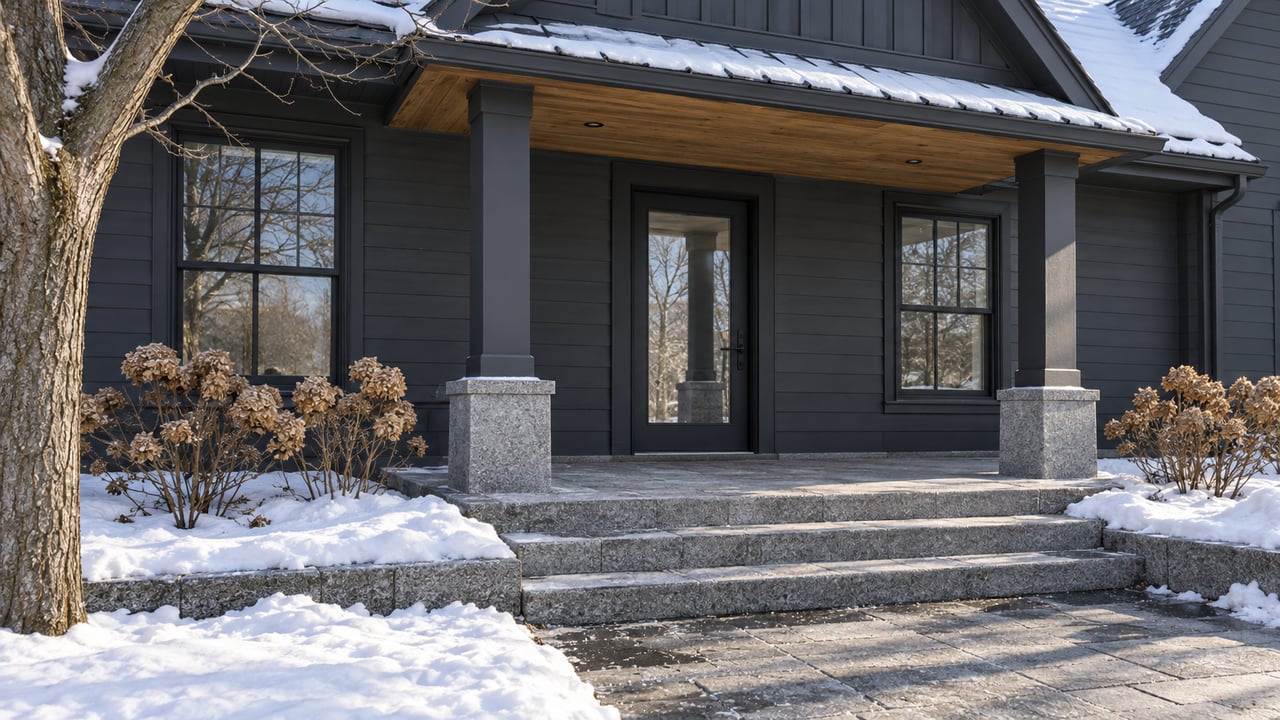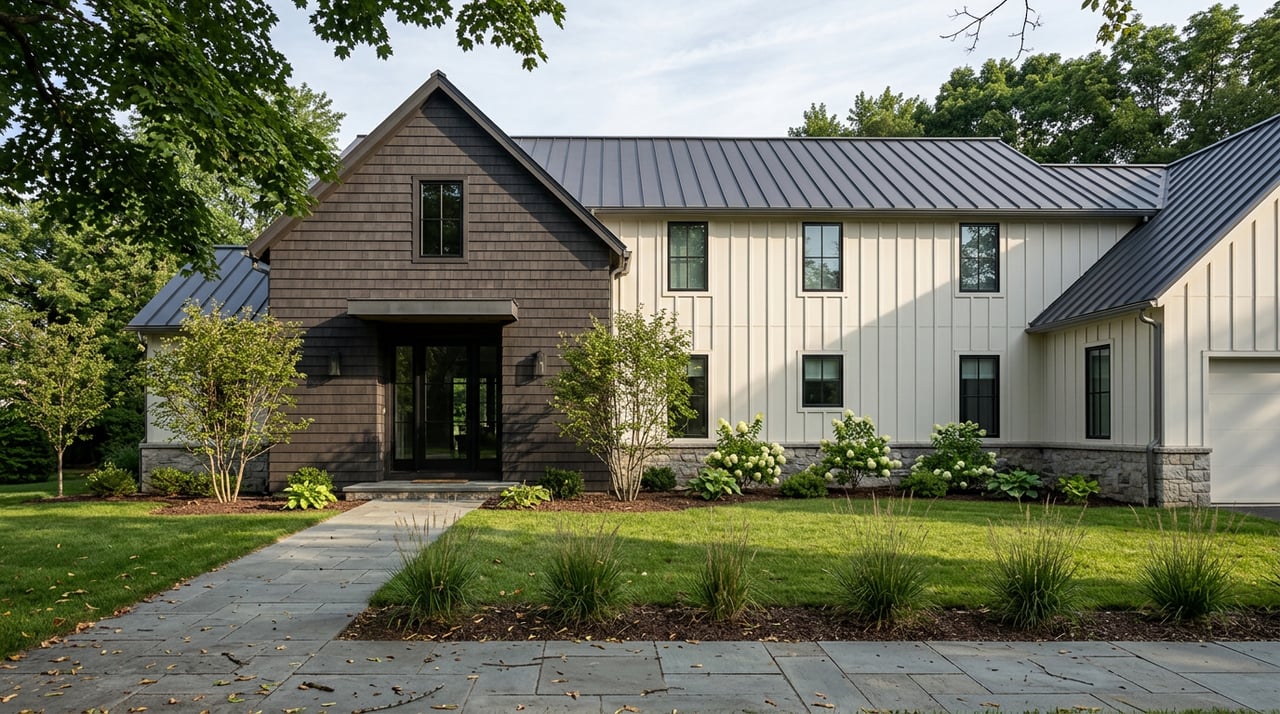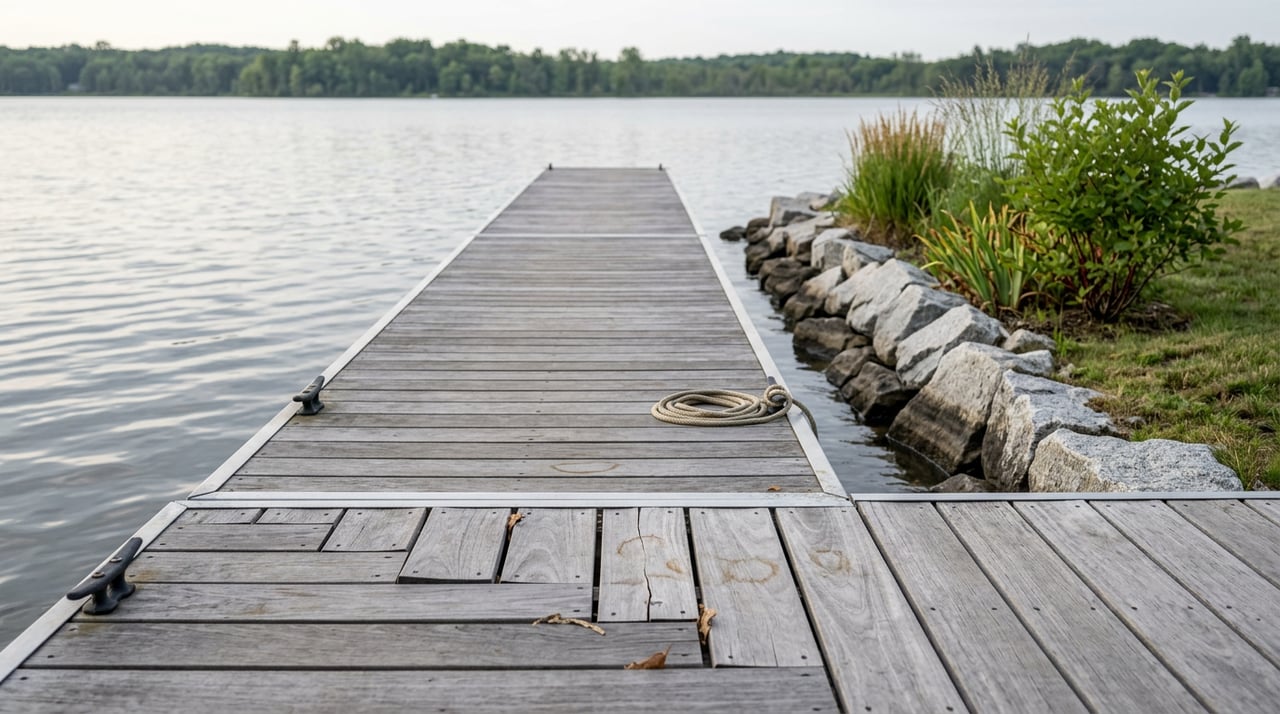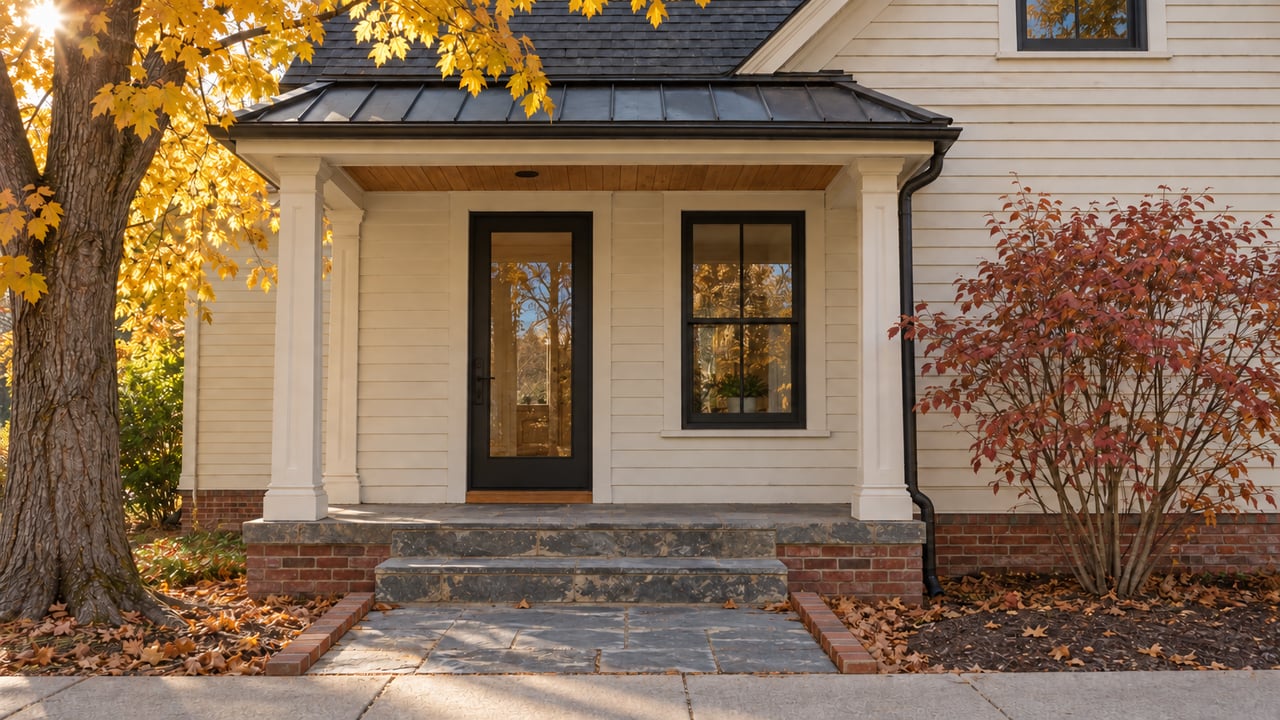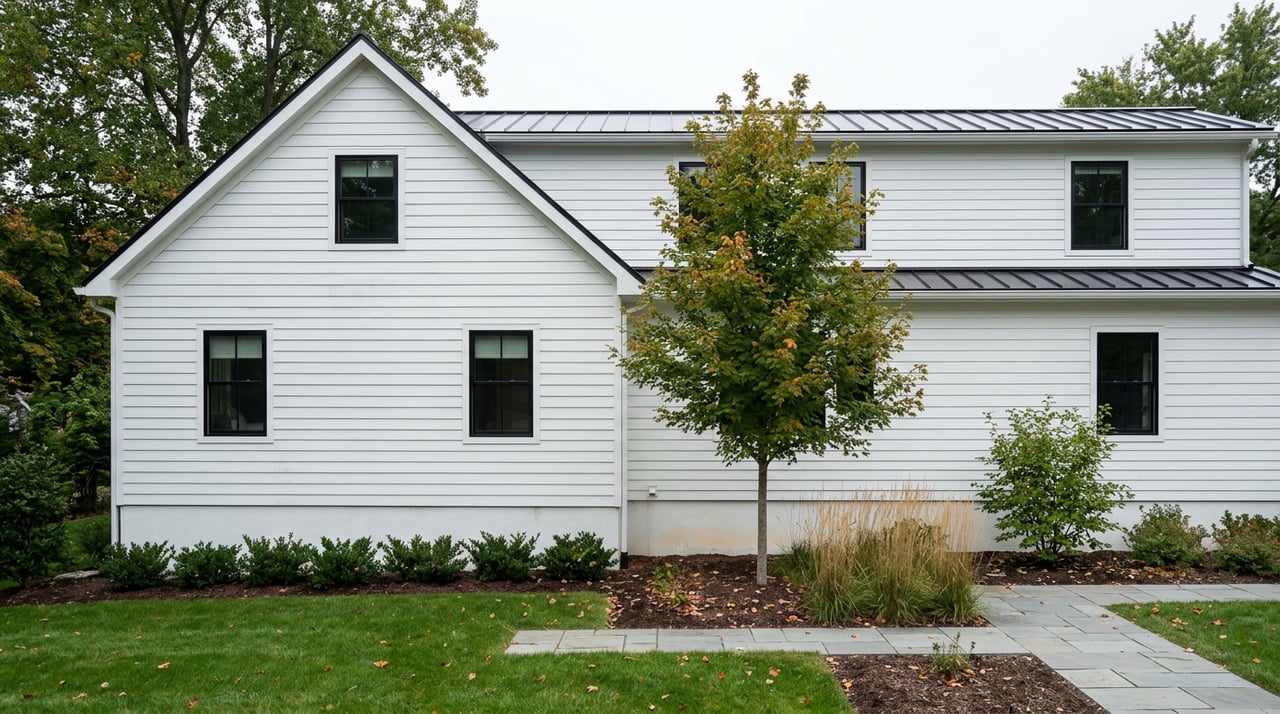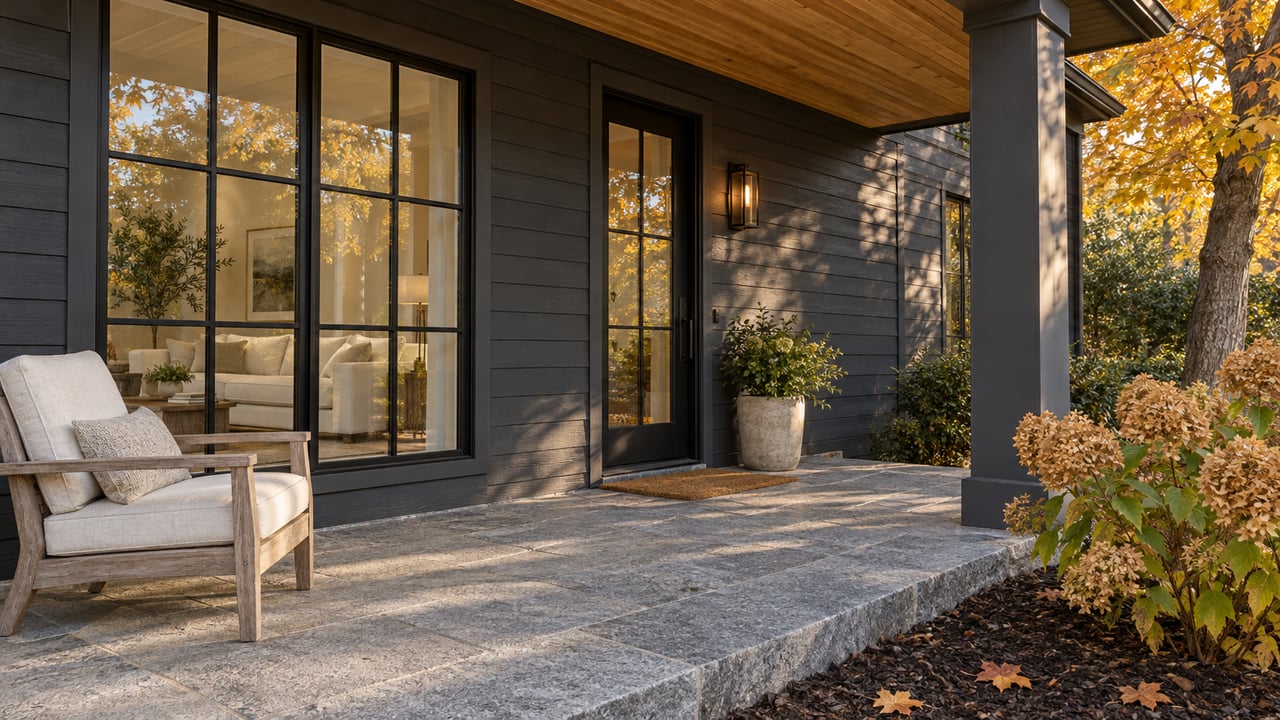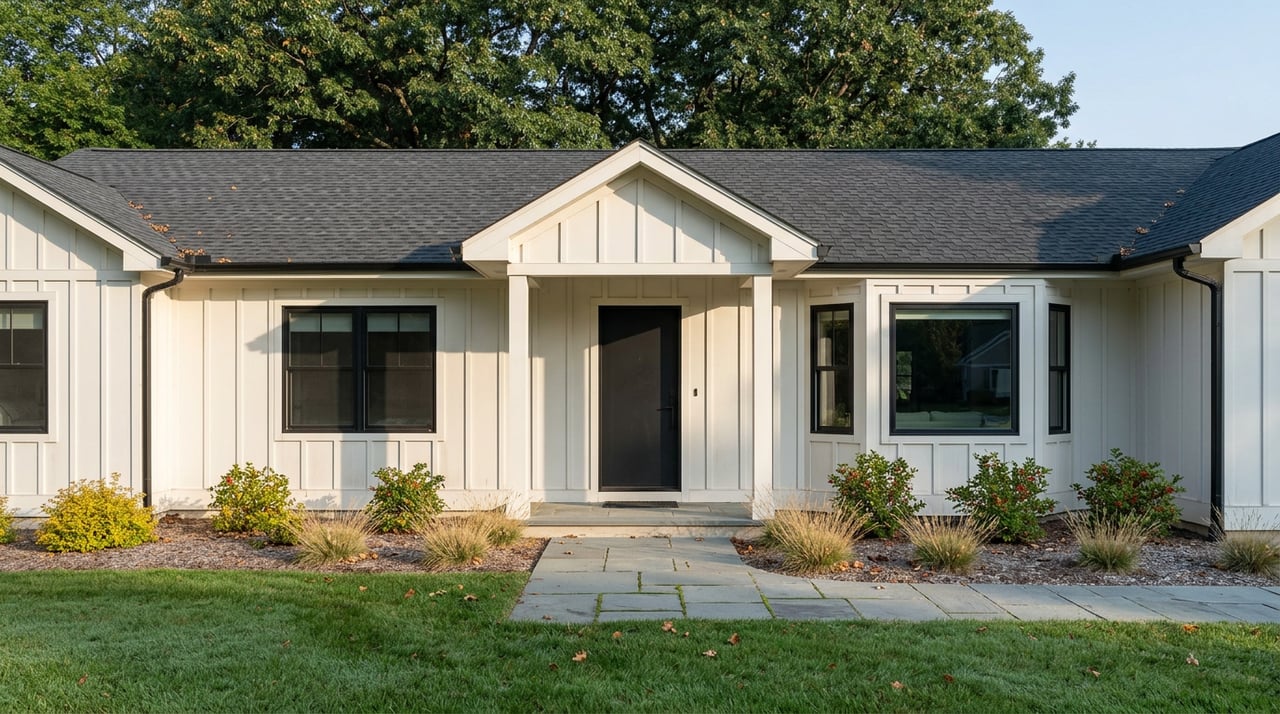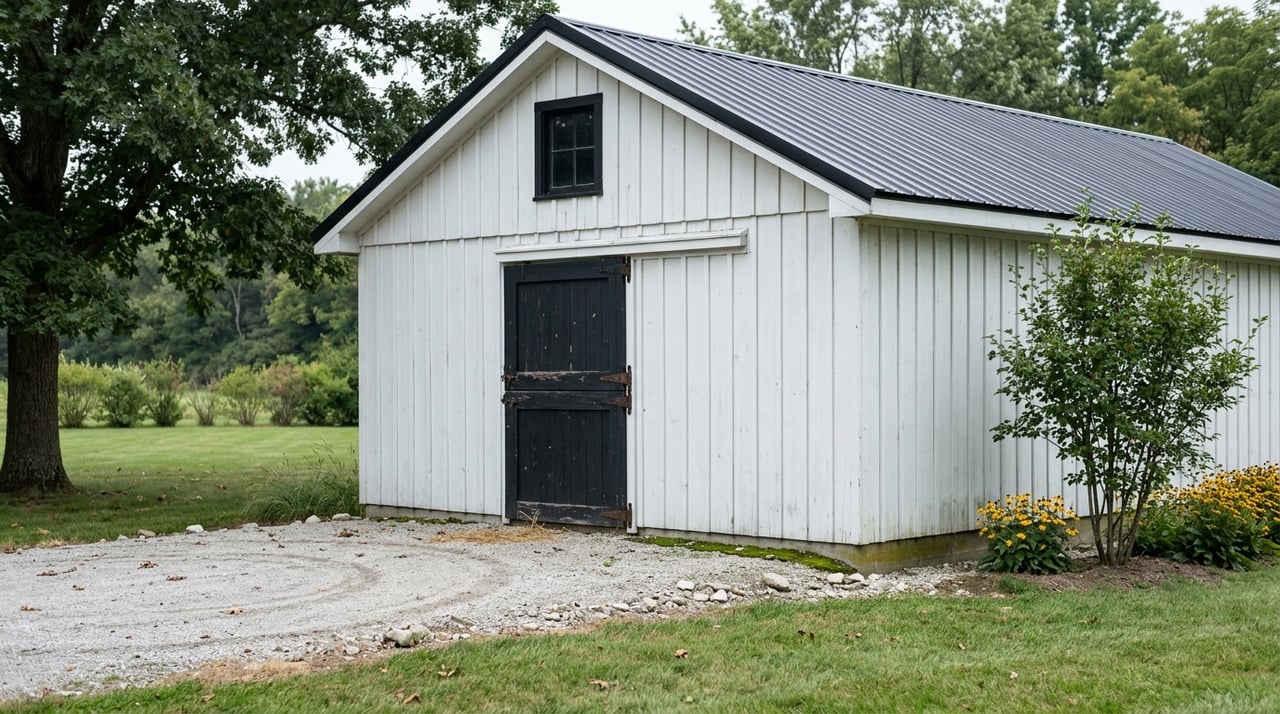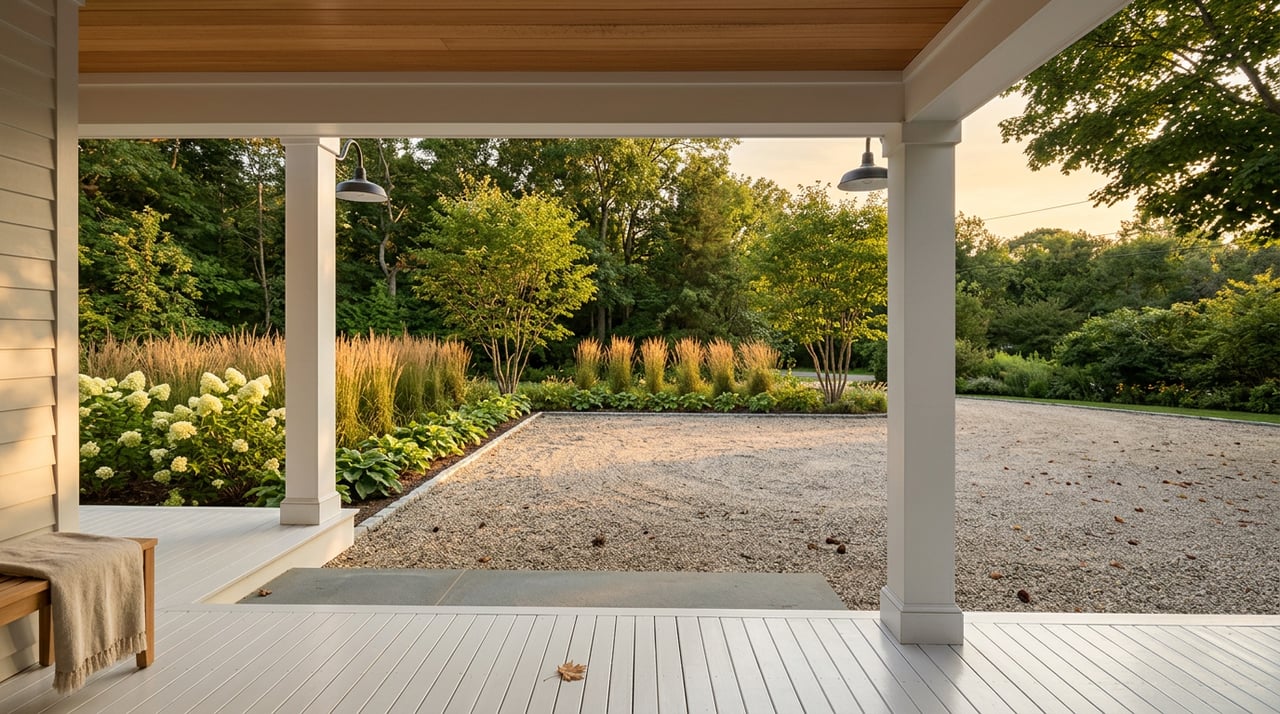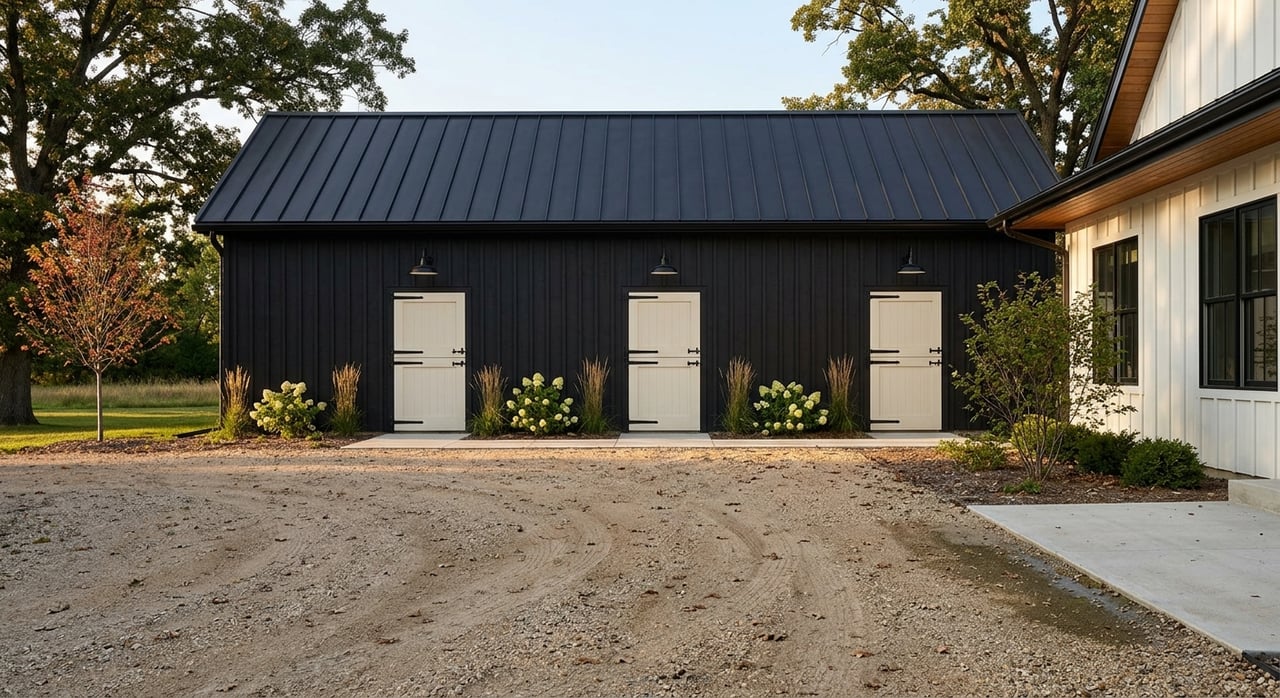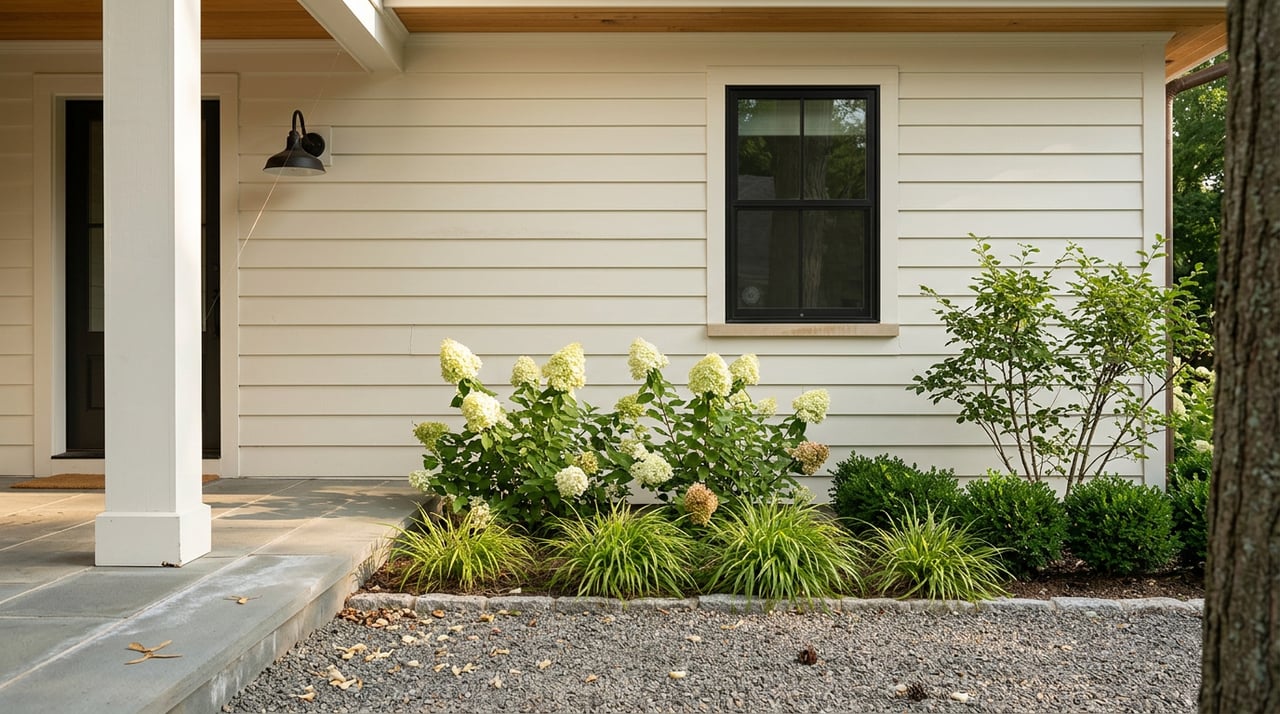
Wondering whether a classic cottage or a modern build makes more sense on Lake Minnetonka? It is a common question, especially when you are weighing charm against convenience, or shoreline character against a more turnkey lifestyle. If you are buying, selling, or planning a long-term move in the Glen Lake and greater Lake Minnetonka market, this guide will help you think through the tradeoffs with more clarity. Let’s dive in.
Lake Minnetonka Is Not One Market
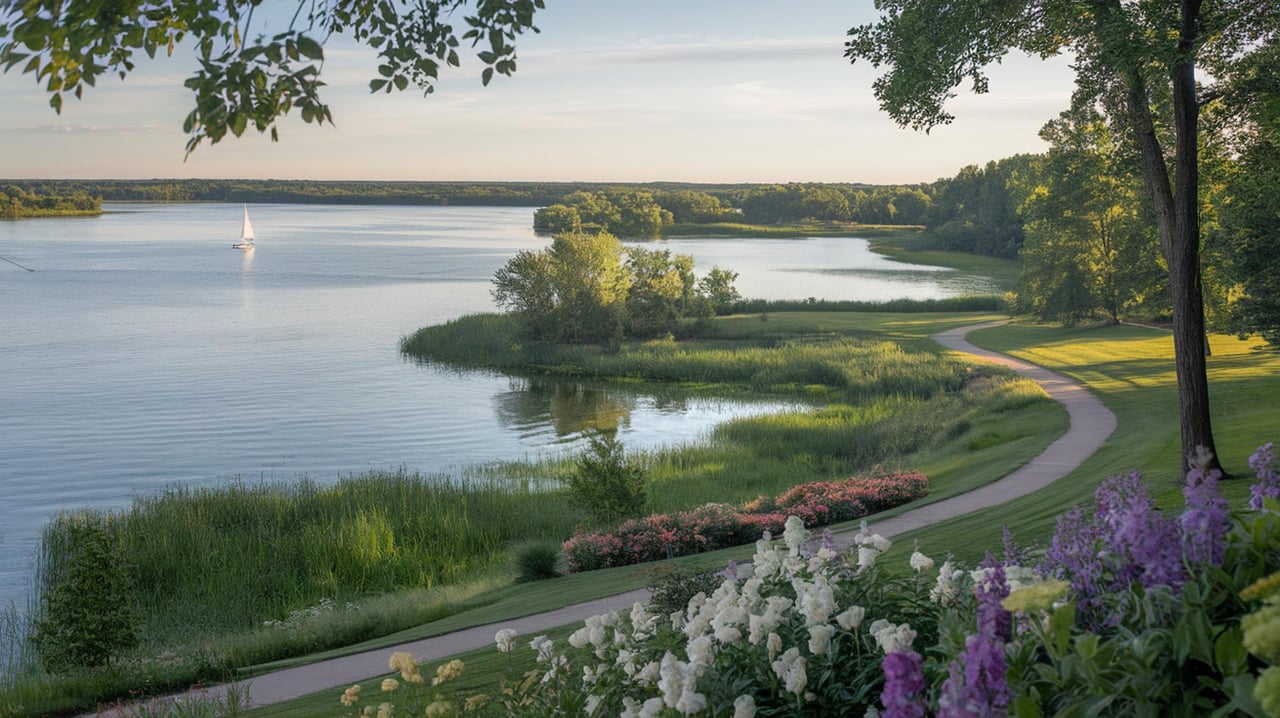
Before you compare house styles, it helps to understand the setting. Lake Minnetonka is a large, highly managed lake system of about 14,500 acres and 125 miles of shoreline, with lake oversight shaped by 14 bordering municipalities through the Lake Minnetonka Conservation District.
That matters because a “Lake Minnetonka home” can mean very different things depending on the location, lot shape, shoreline, and local rules. The broader Lake Minnetonka Area market includes places like Wayzata, Excelsior, Orono, Minnetrista, Shorewood, Tonka Bay, and others, each with different housing stock and buyer expectations.
Recent market data also shows how wide the range can be. For May 2026, the broader Lake Minnetonka Area posted a median sales price of $669,400 for the month and $750,000 on a rolling 12-month basis, while the average sales price was about $1.05 million, with 70 days on market and 4.3 months of supply.
The spread between the median and average suggests that a smaller number of high-end homes are still pulling prices upward. In other words, this is a market where property type, site quality, and presentation can make a major difference.
Why Classic Cottages Still Appeal
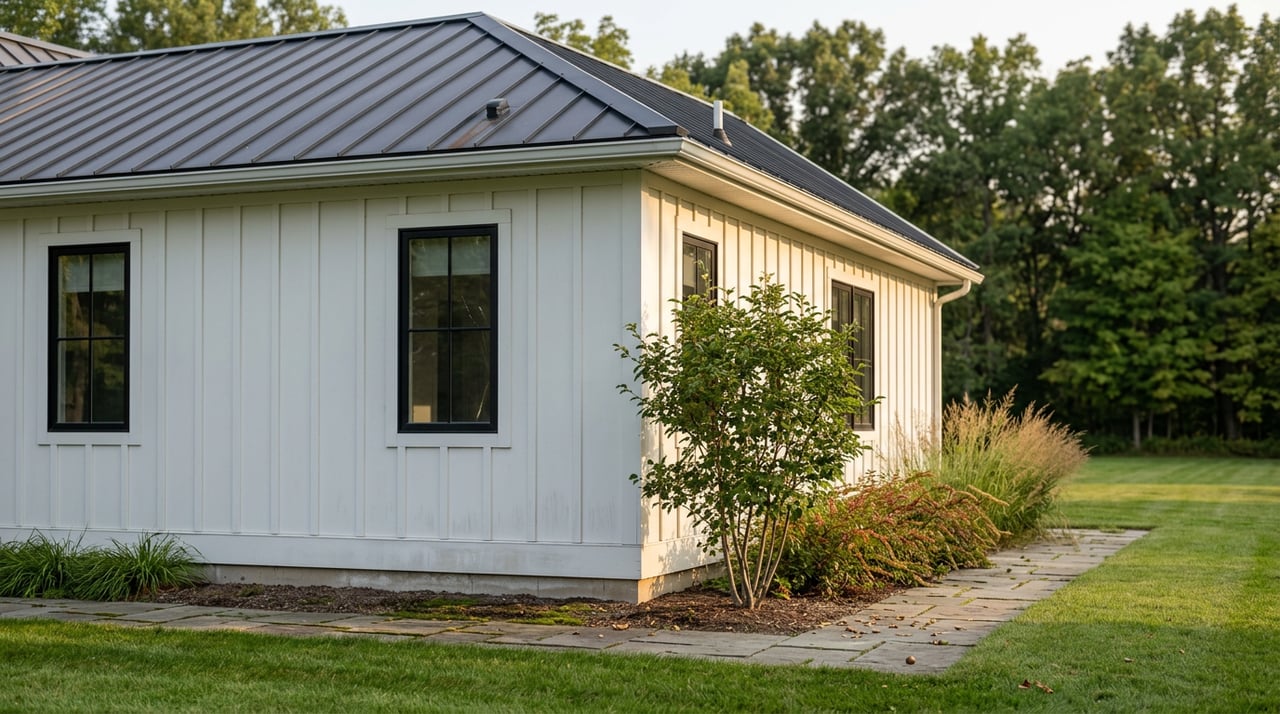
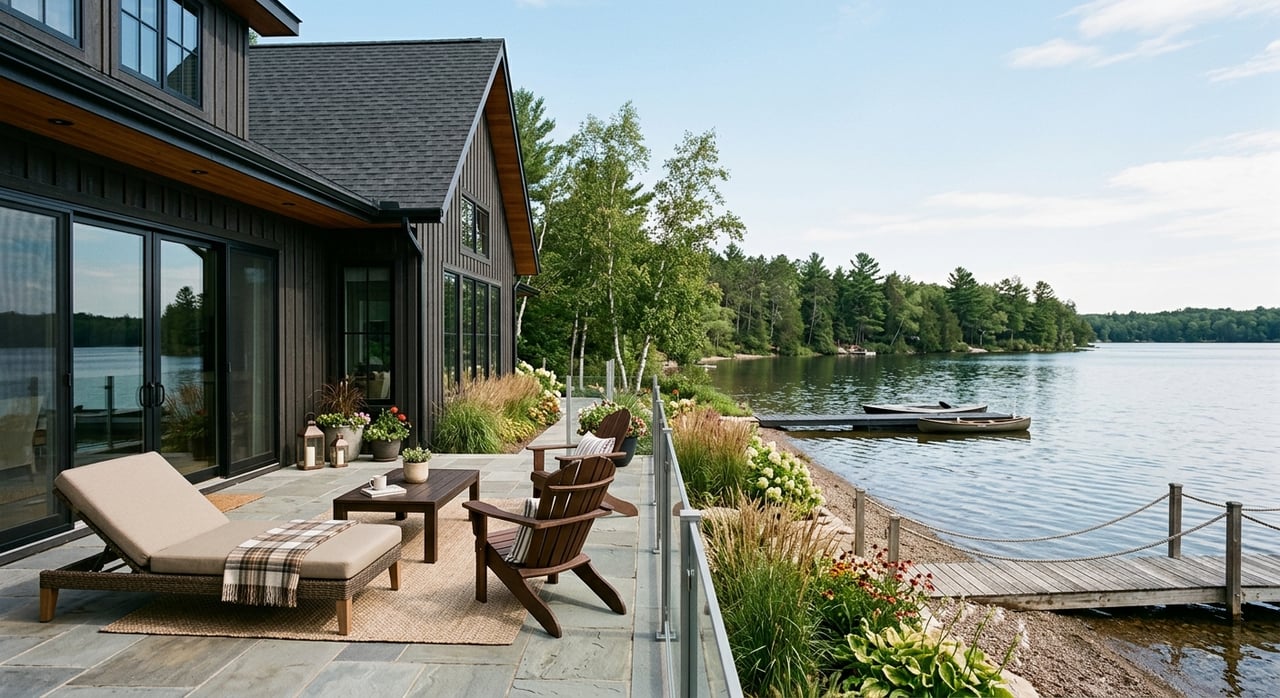
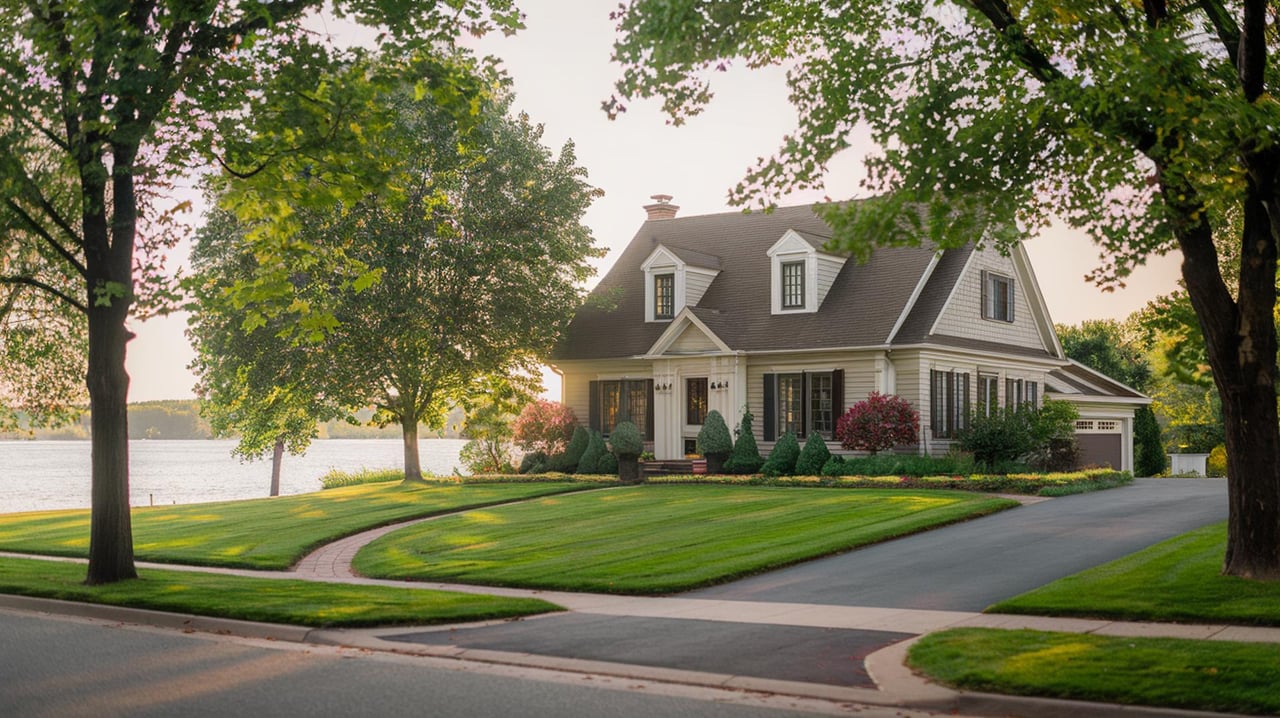
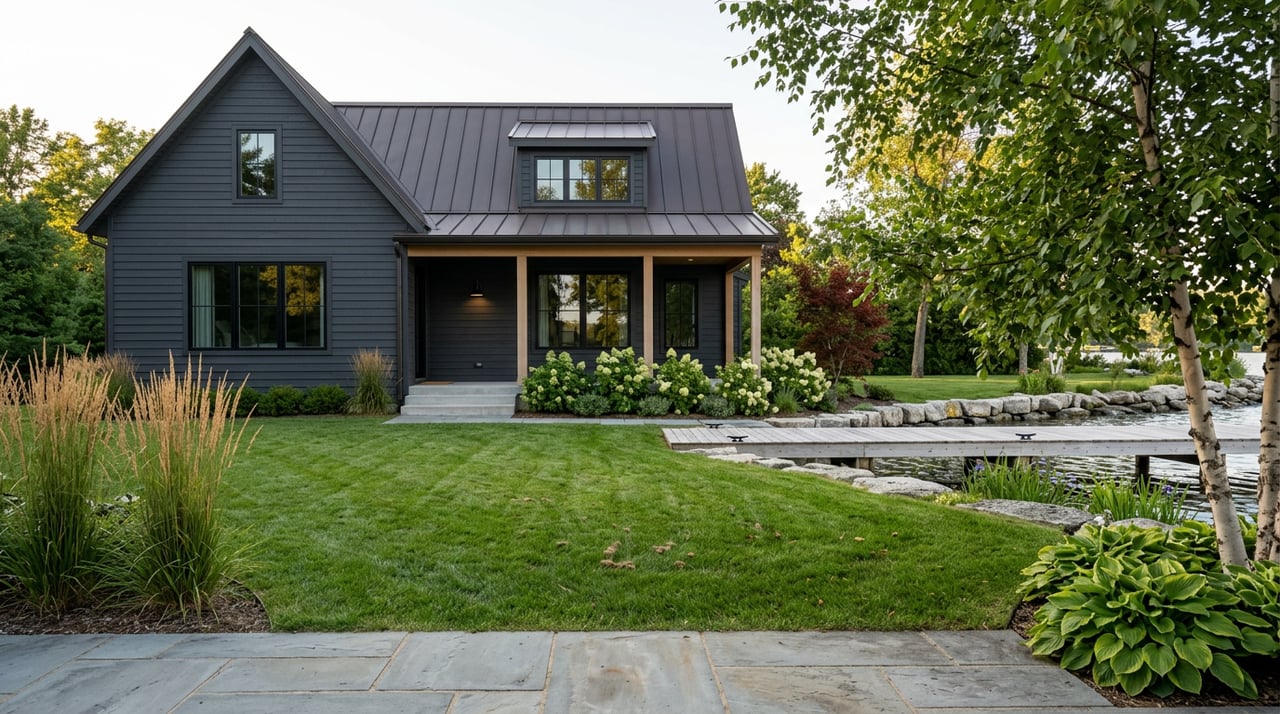
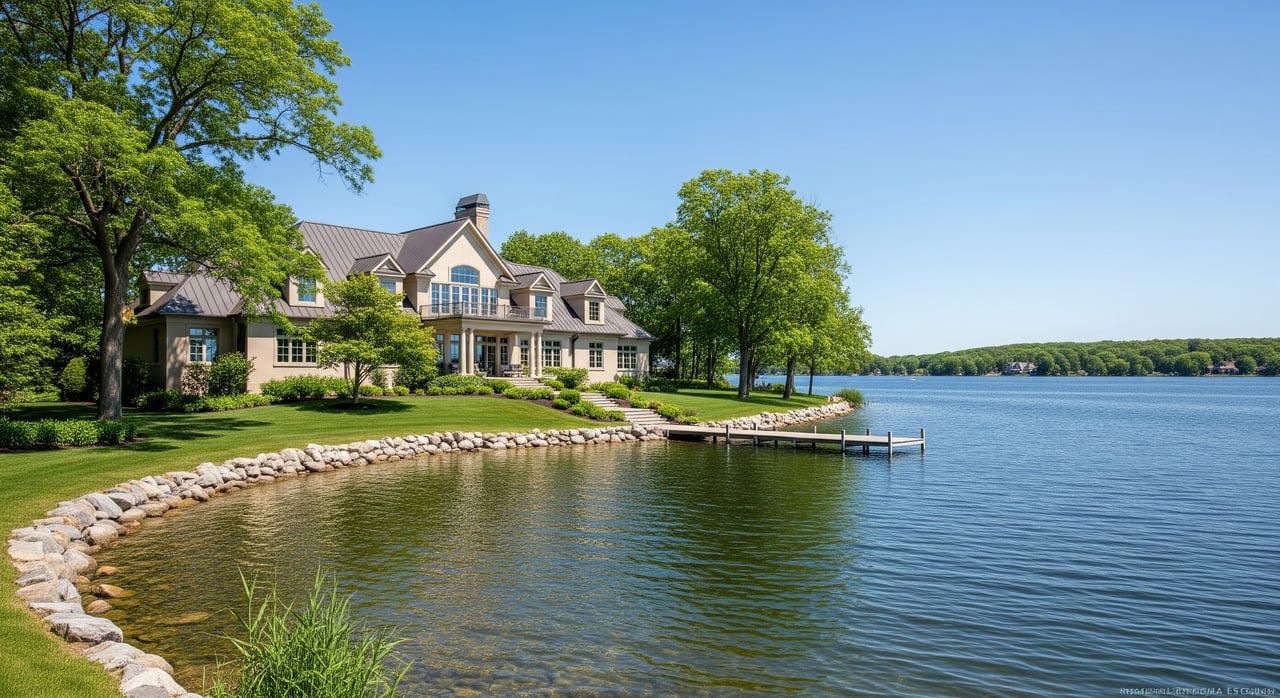
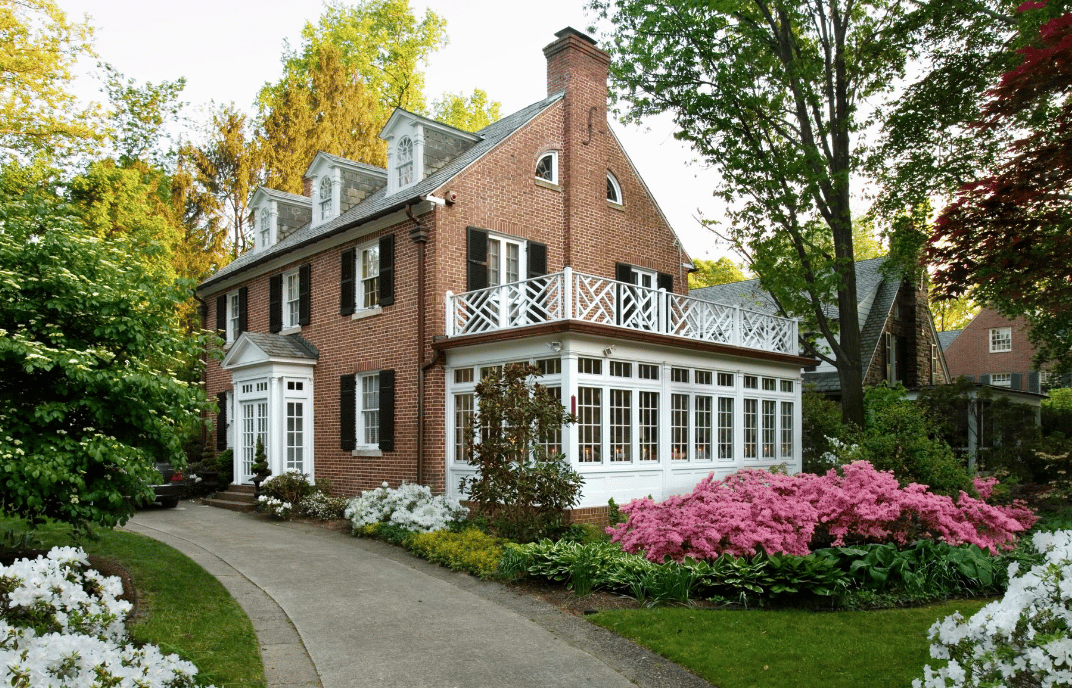
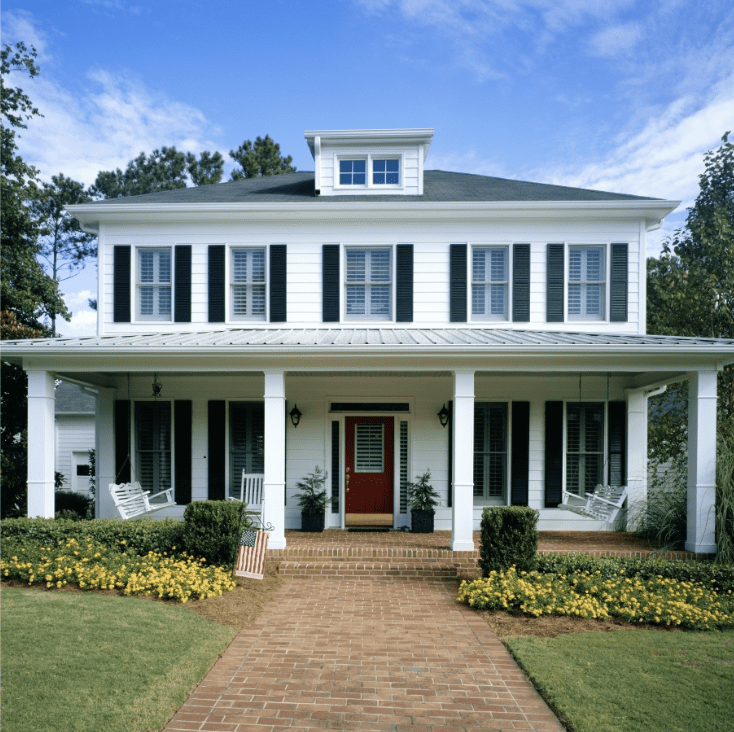
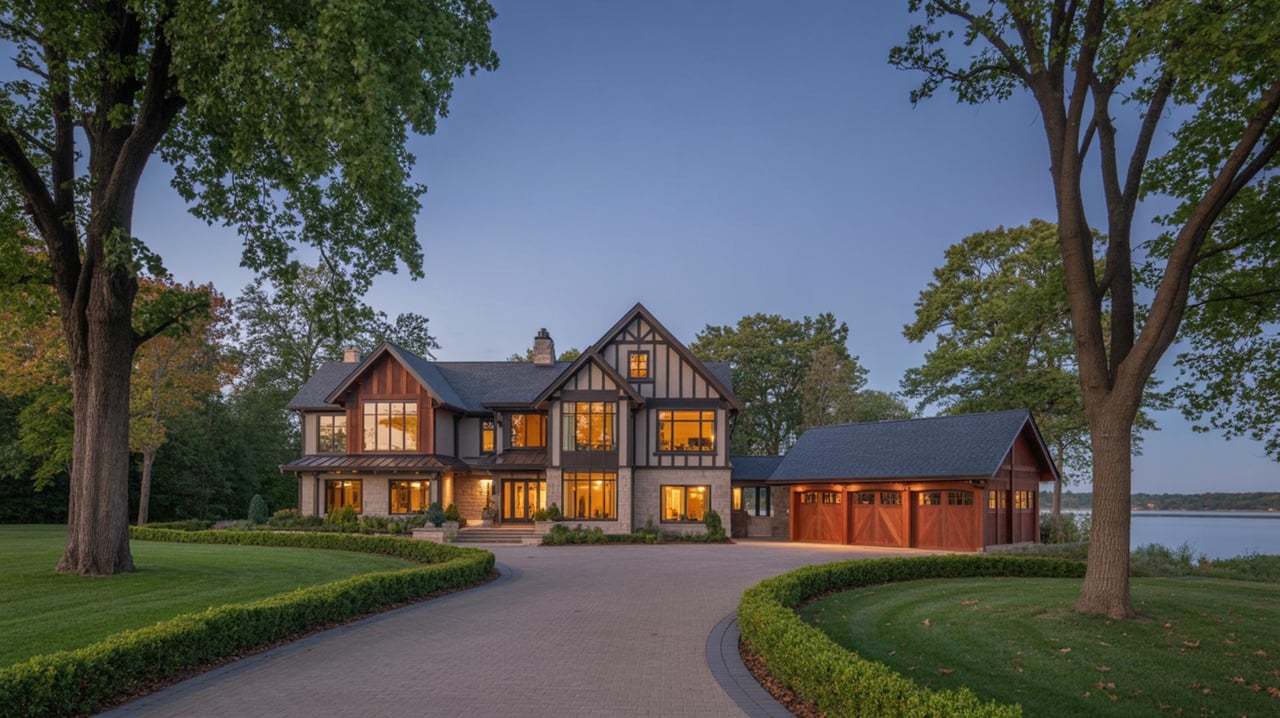
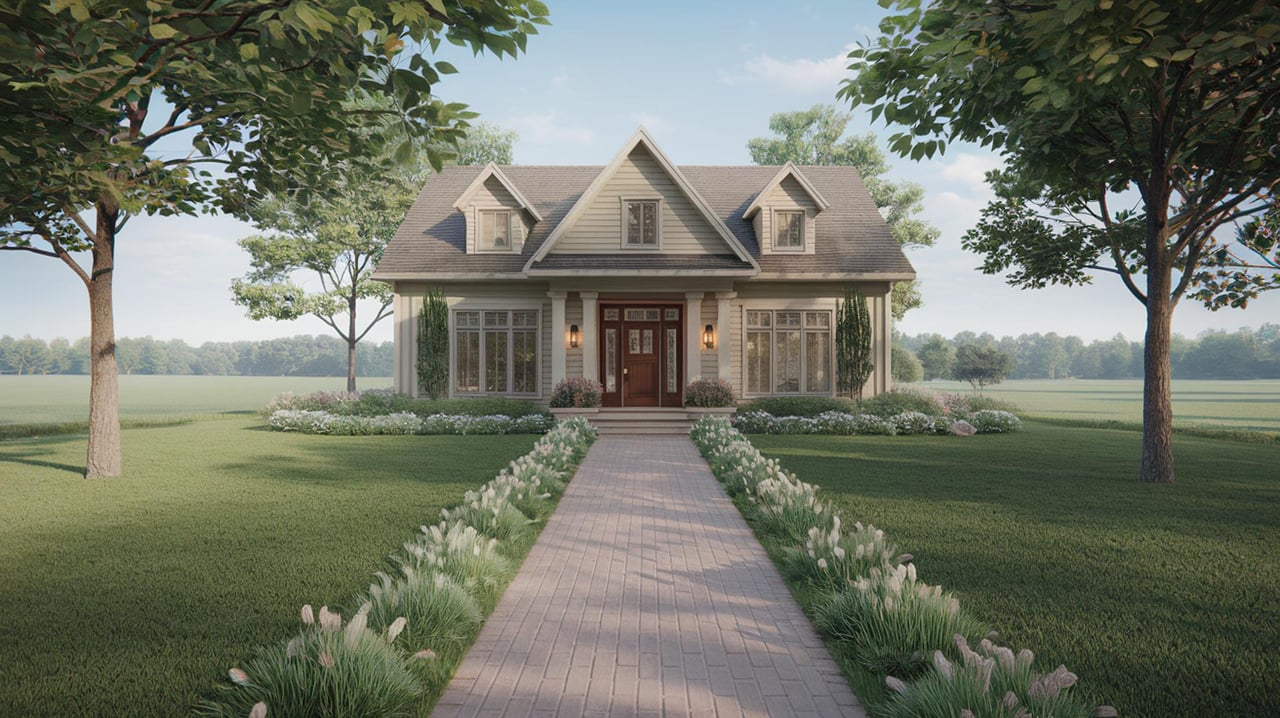
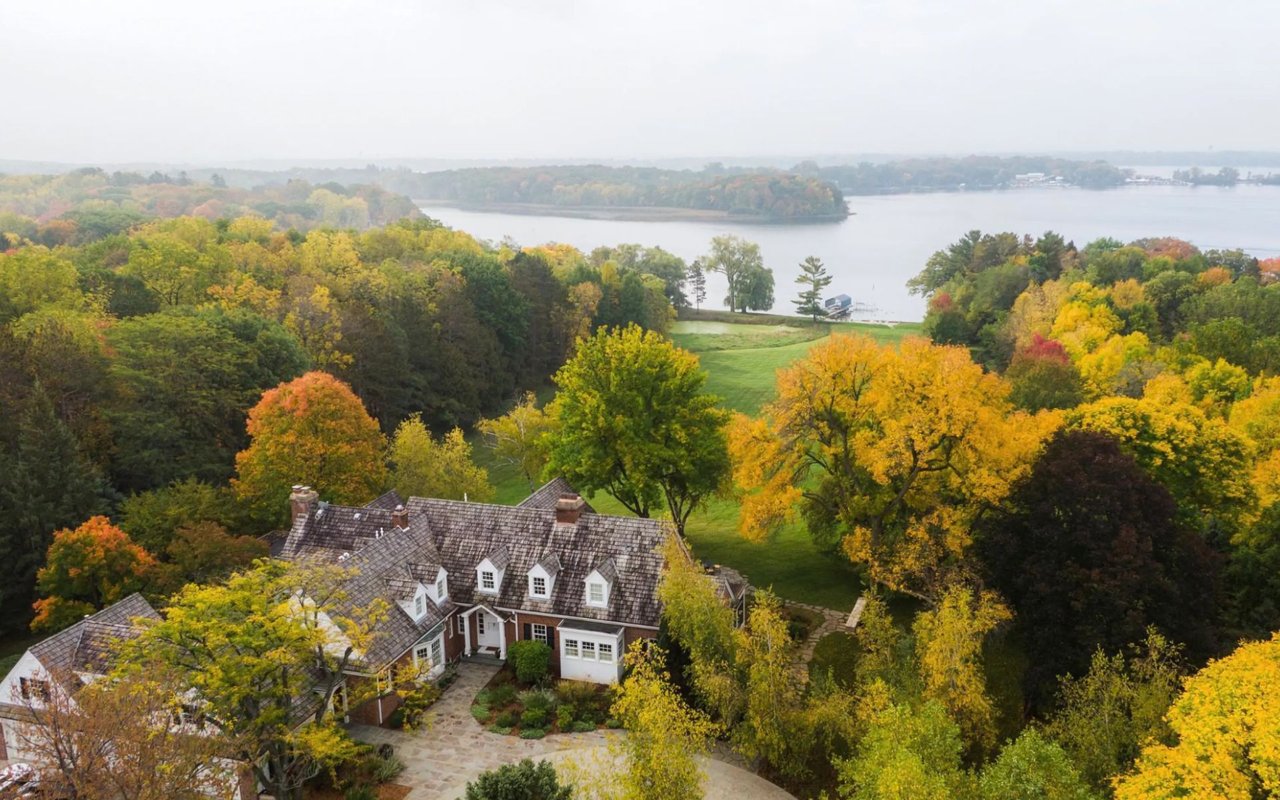
Classic cottages carry a kind of lake identity that many buyers still love. Historically, Lake Minnetonka grew from a summer destination into a place where many cottages later became year-round homes, especially after World War II.
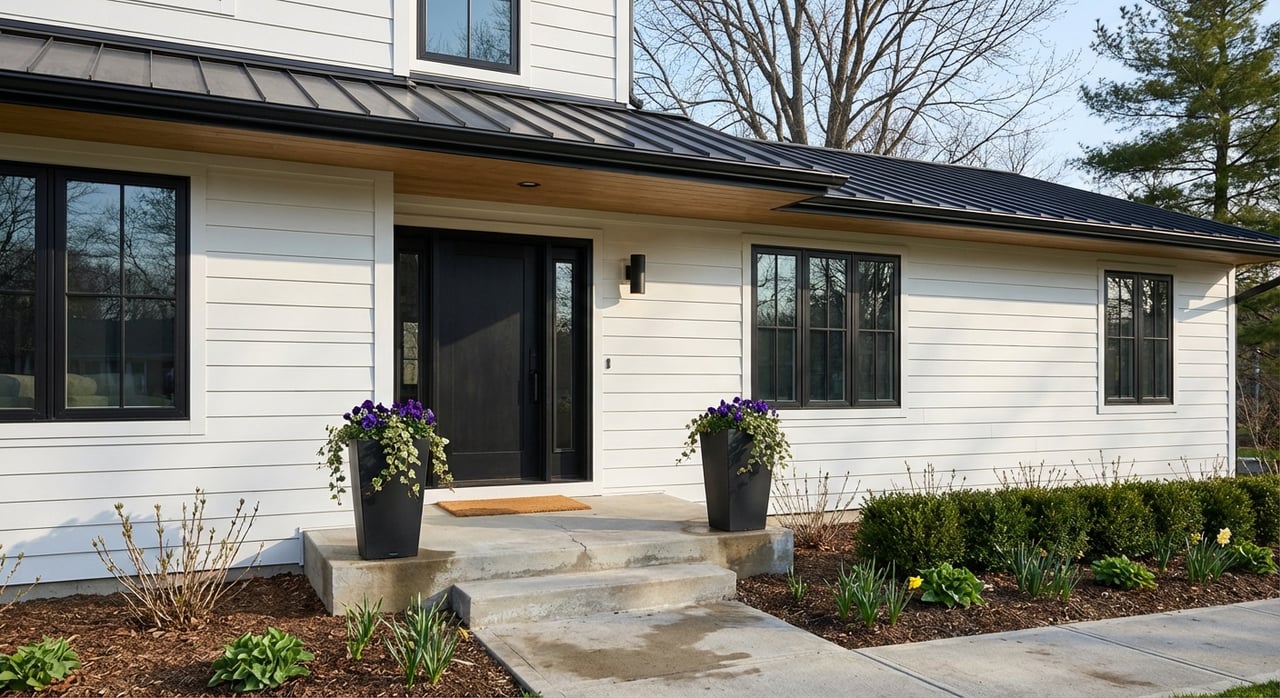
That history still shapes the feel of the housing stock today. Older homes often have more distinct rooms, a cozier layout, and a sense of place that feels tied to the lake’s earlier character.
For some buyers, that is the whole point. A classic cottage can feel intimate, relaxed, and deeply connected to the shoreline in a way that newer homes sometimes try to recreate but cannot fully duplicate.
What Buyers Love About Cottages
If you are drawn to a classic cottage, you are usually responding to more than square footage. The appeal often includes:
- Original character and a sense of history
- Established shoreline positioning
- Mature landscape and a more organic setting
- A cozy interior feel with more defined rooms
- The emotional value of a home that feels distinctly “lake”
These properties often stand out because they feel irreplaceable. Even when the home itself is modest, the setting can carry tremendous value.
Where Cottages Get Complicated
The challenge is that many older shoreland homes are nonconforming under current rules. In Minnesota shoreland areas, existing nonconforming structures may generally be maintained, repaired, restored, improved, or replaced, but they cannot be expanded.
That can change the conversation quickly. If you fall in love with the cottage but need more space, the real question may not be whether you want an addition. It may be whether the lot, setbacks, septic feasibility, and impervious coverage rules allow you to create the home you actually need.
Minnesota shoreland standards also limit impervious surface coverage to 25 percent of the lot, cap residential city structures at 25 feet in height, and allow only one water-oriented accessory structure within the setback, subject to size and height limits. Guest cottages are also limited in size and height.
So when you look at an older lake property, the lot may matter even more than the house. A beautiful cottage on a strong site can be a smart long-term hold, but only if the property supports your future plans.
Why Modern Builds Win Buyers Over
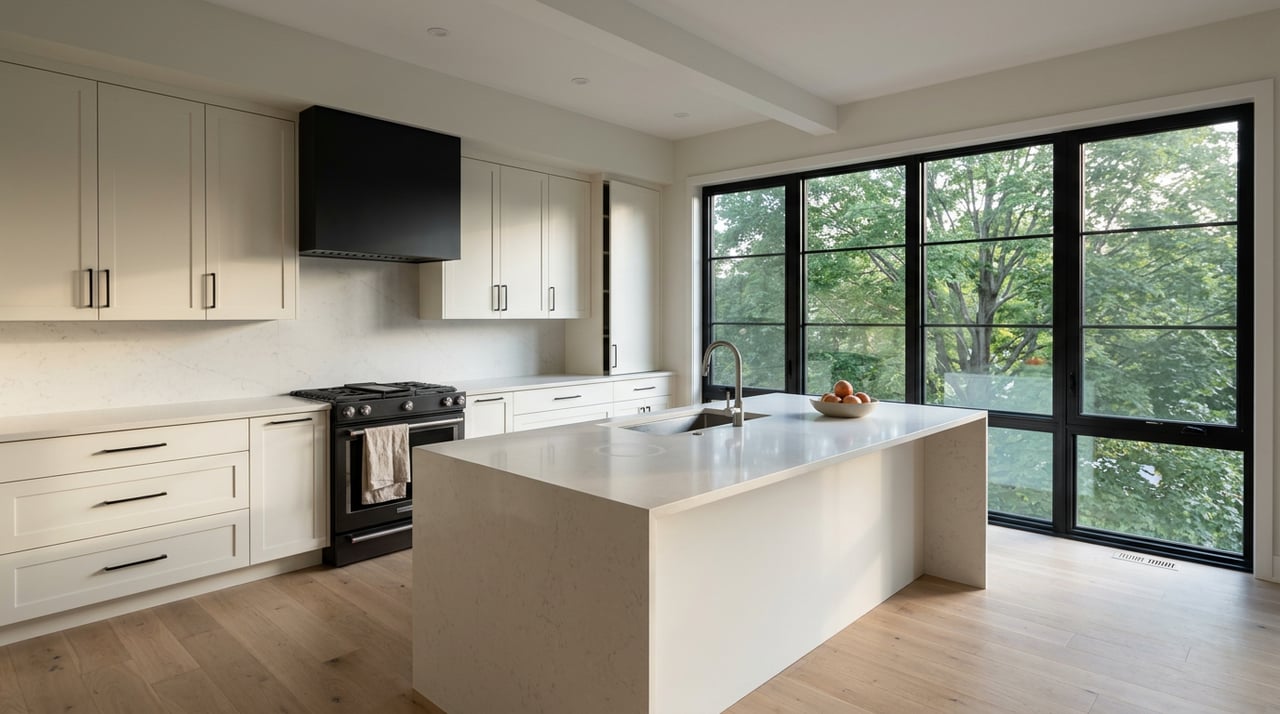
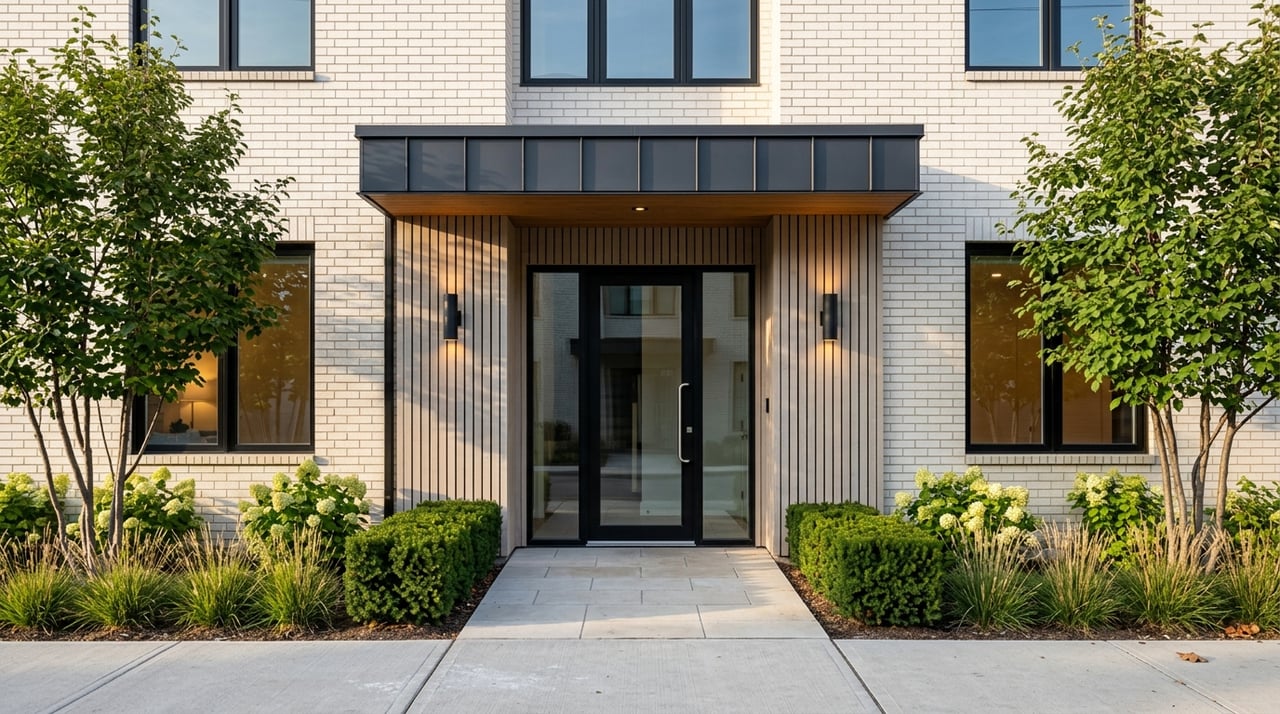
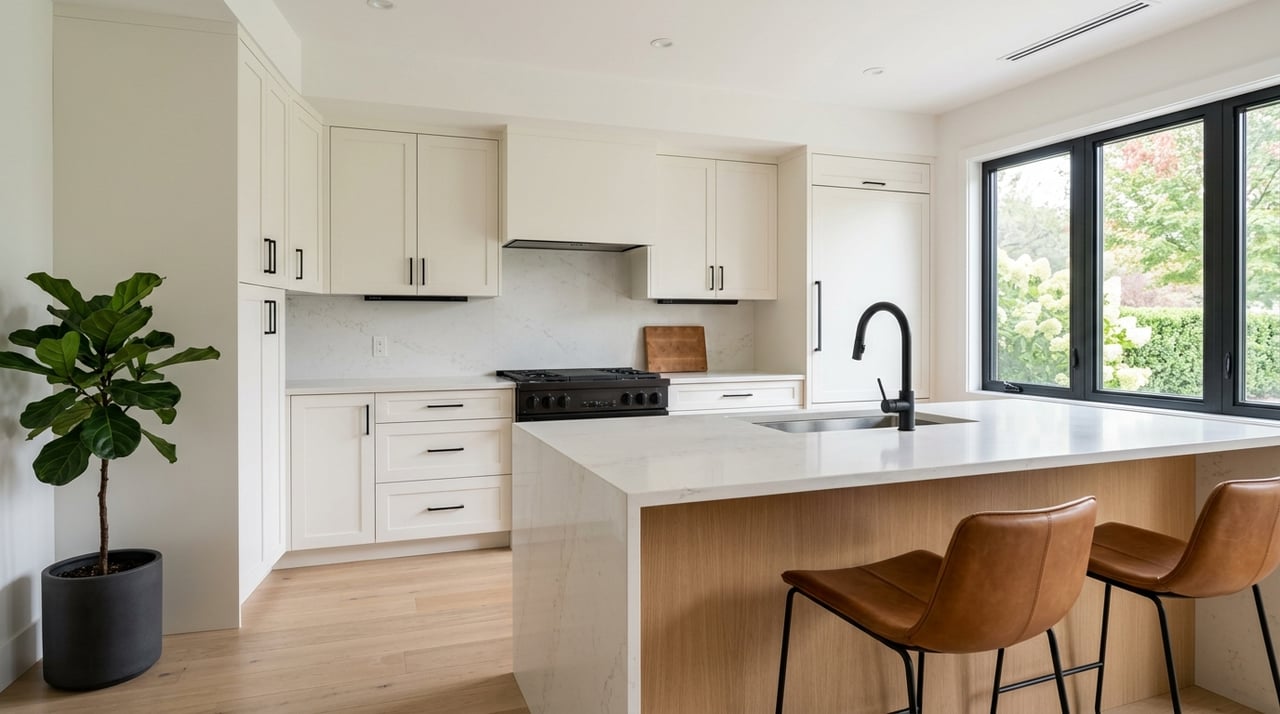
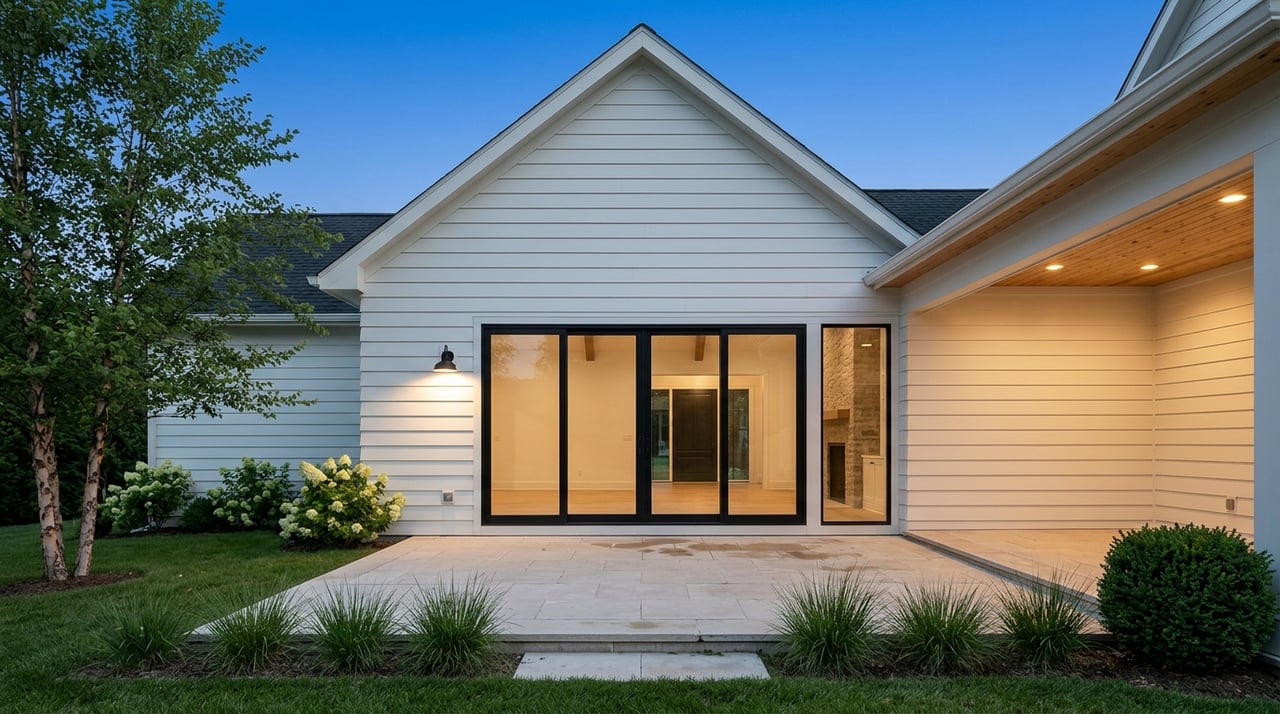
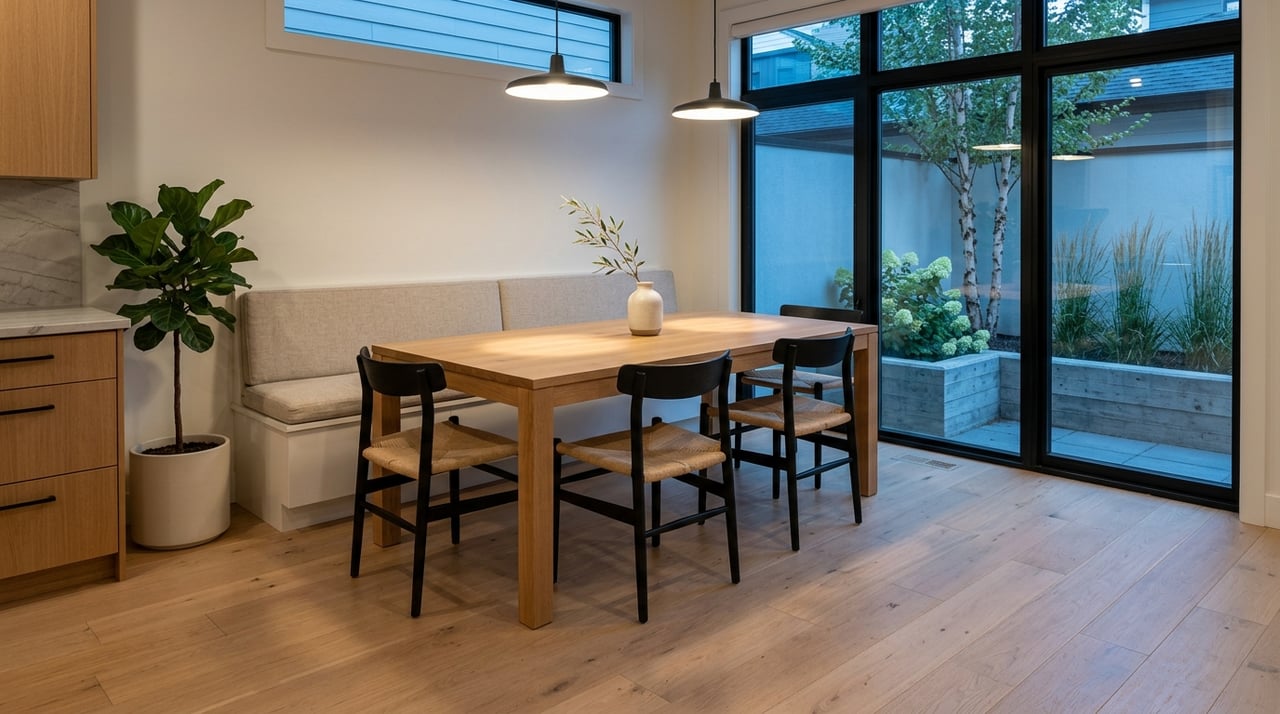
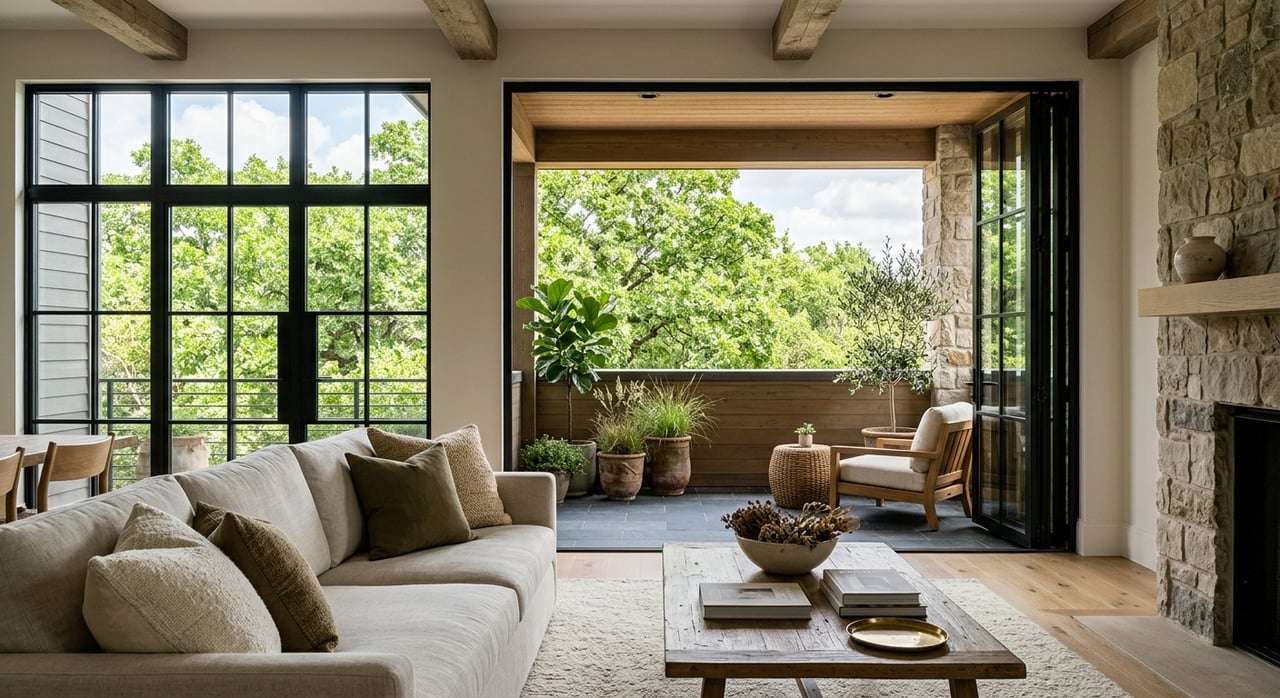
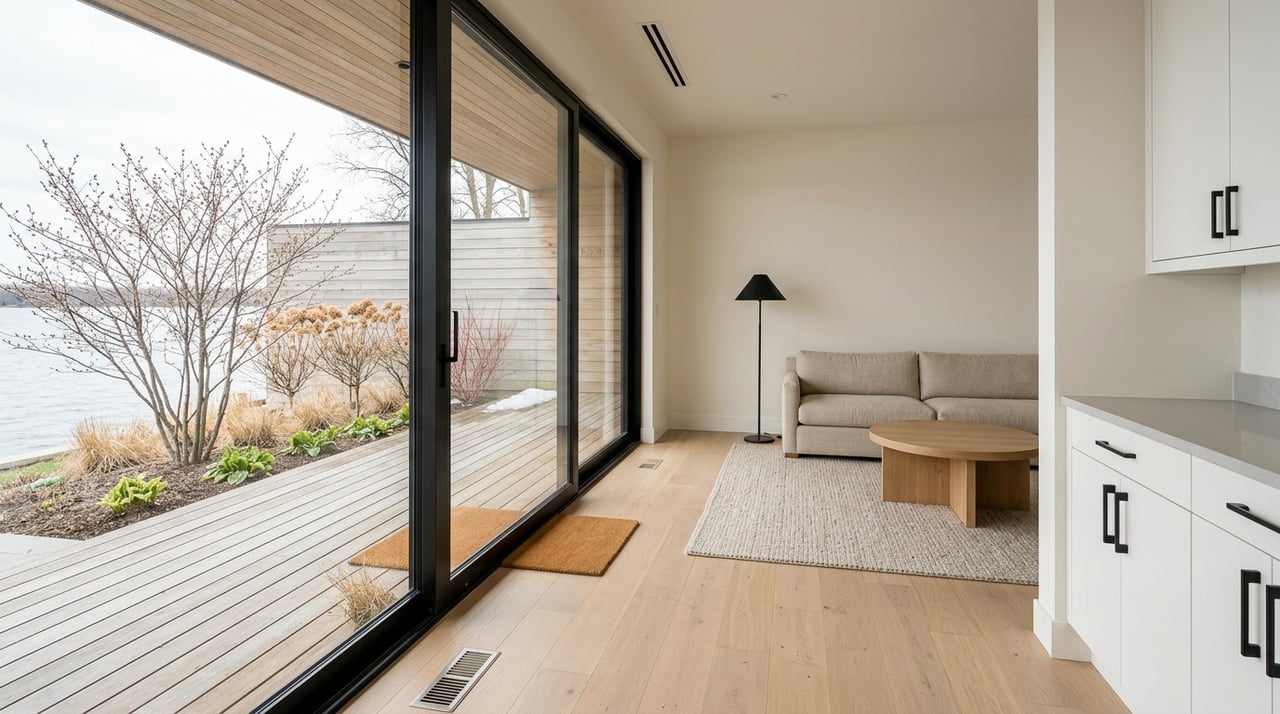
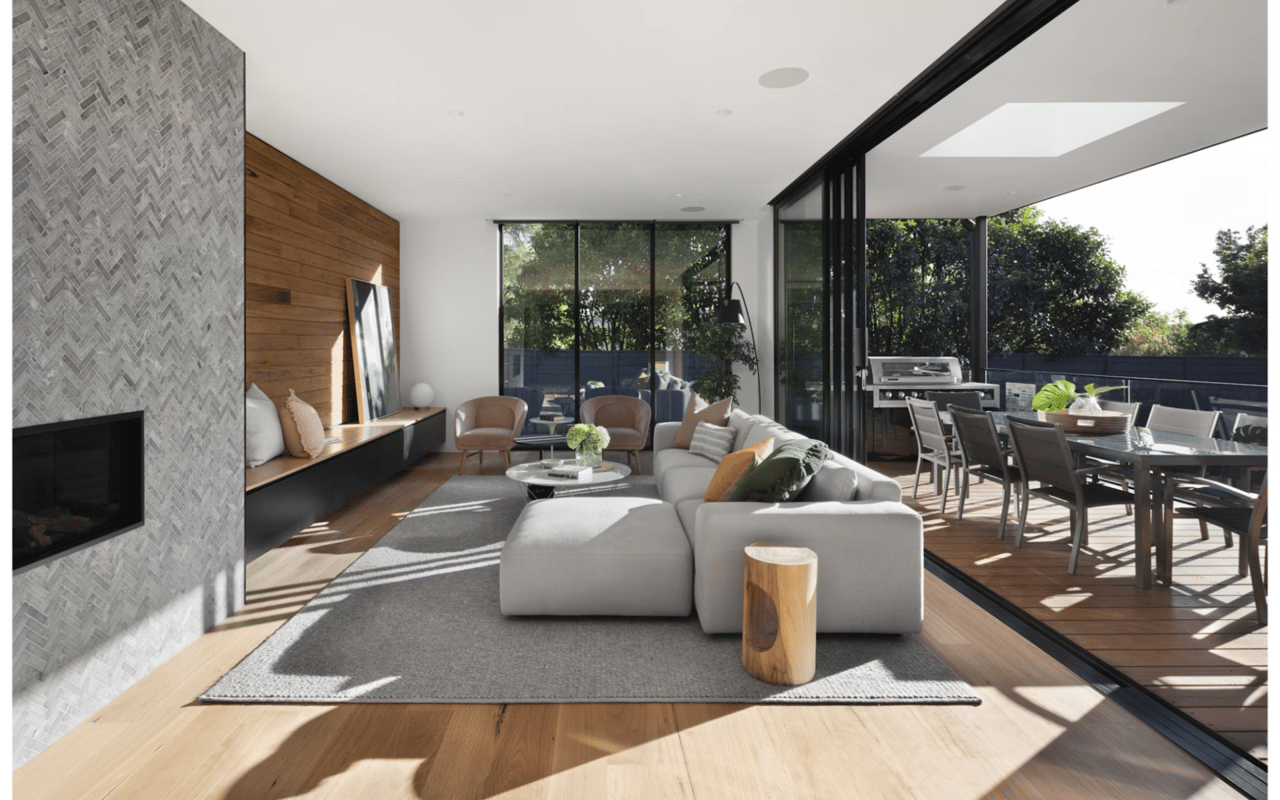
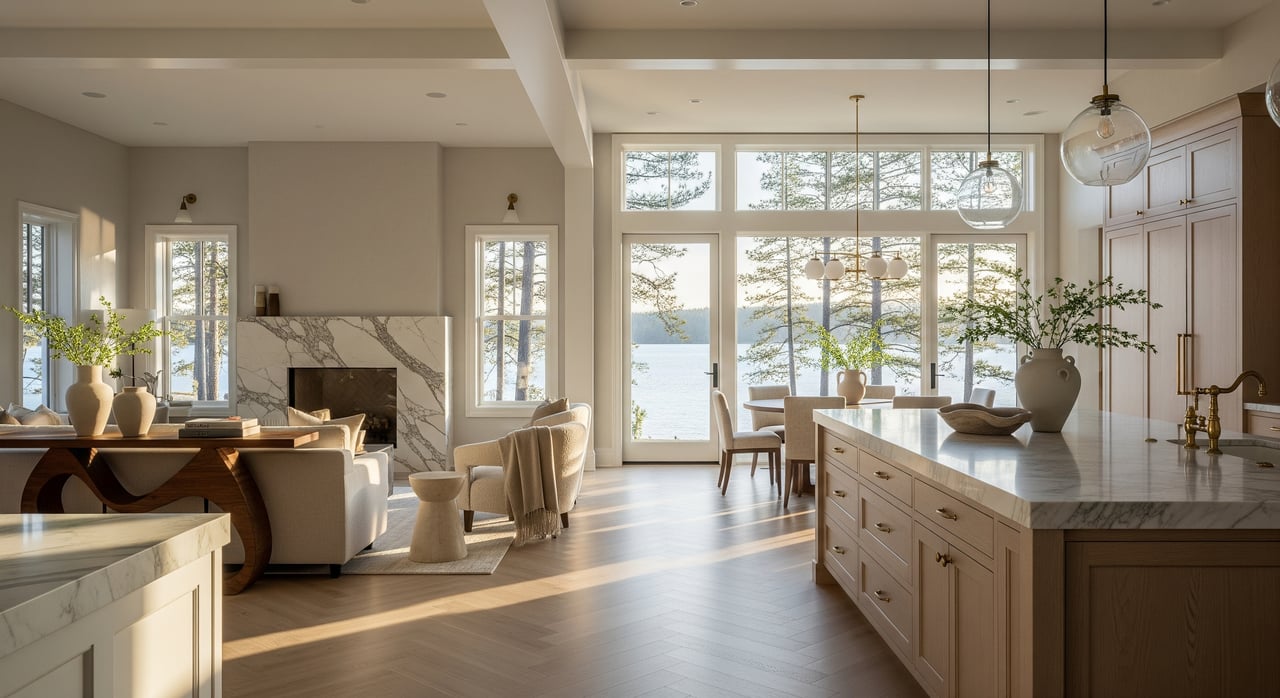
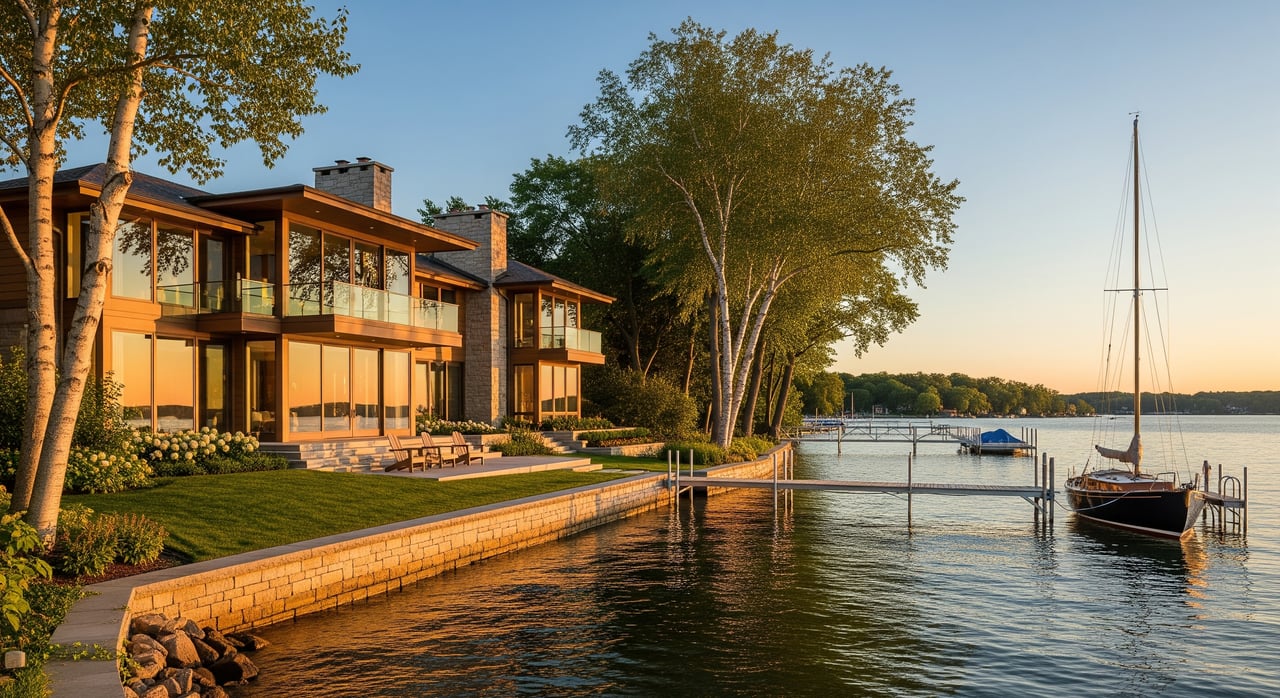
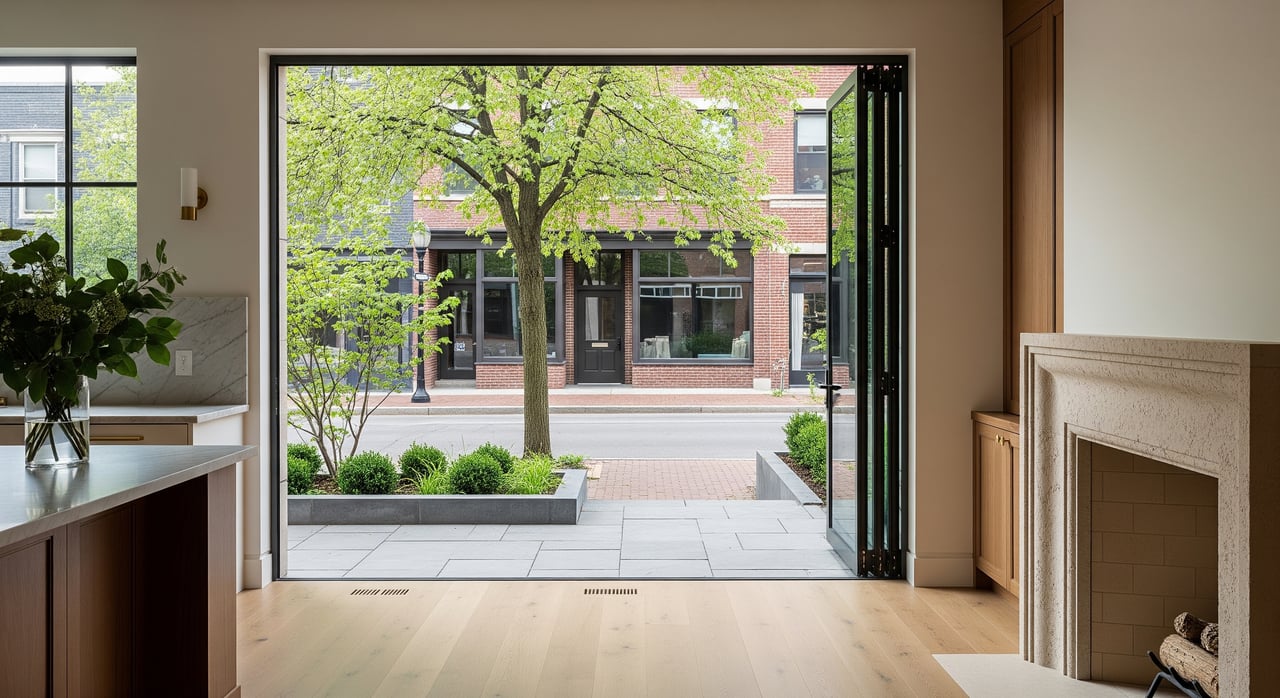
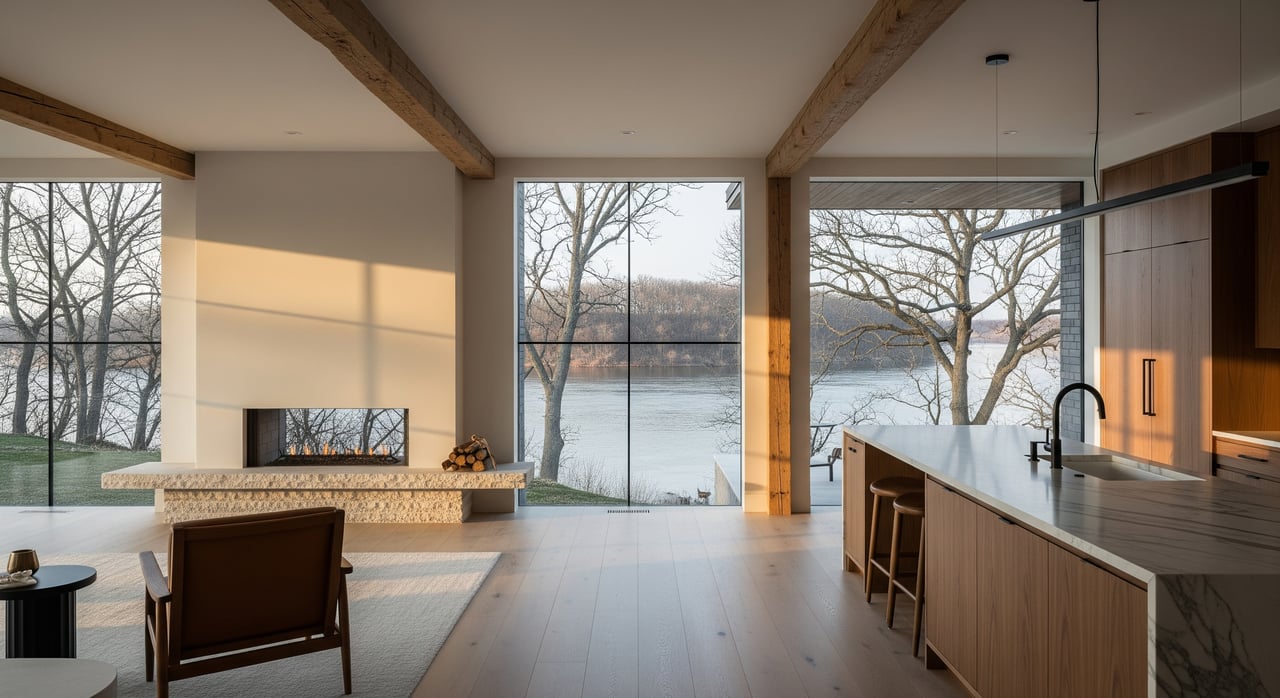
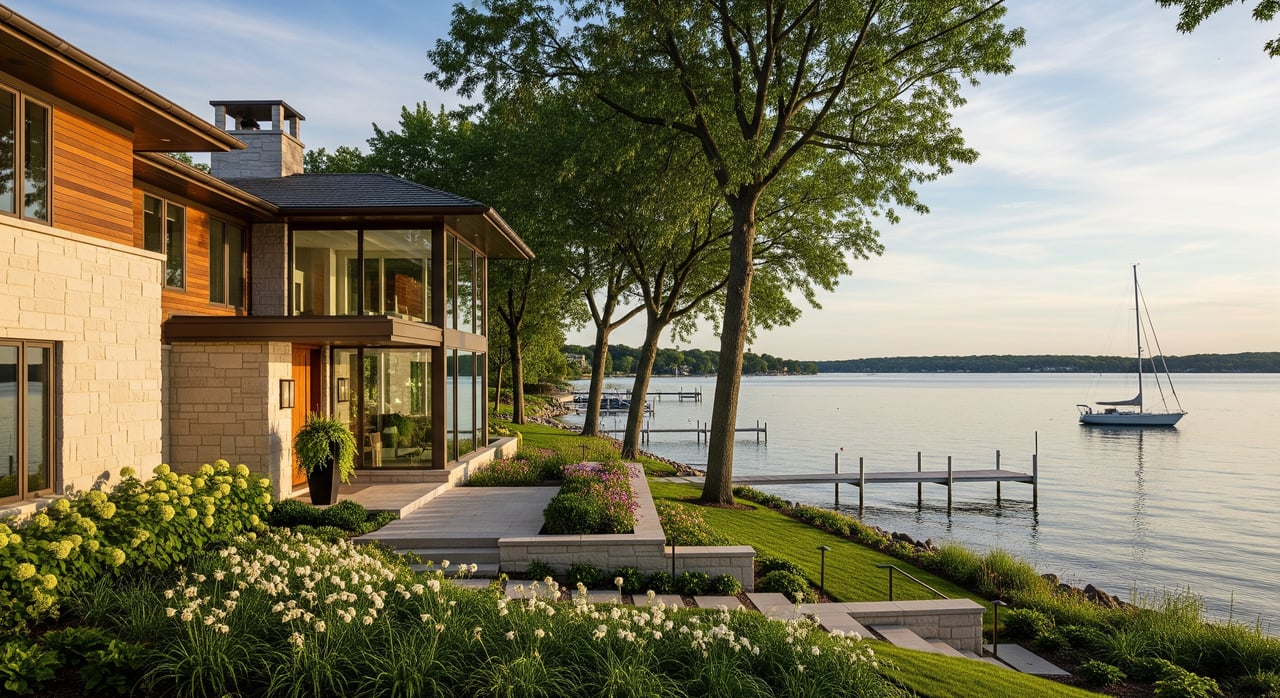
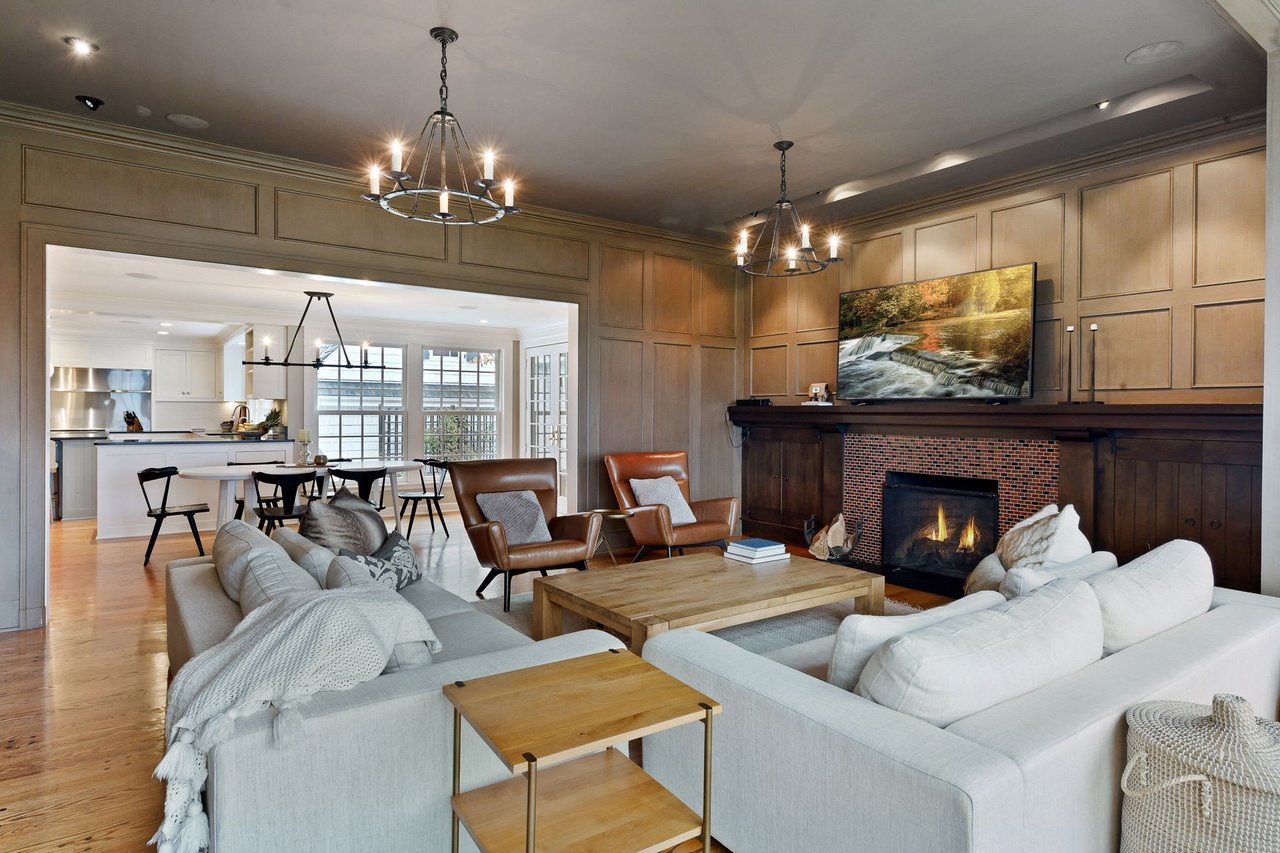
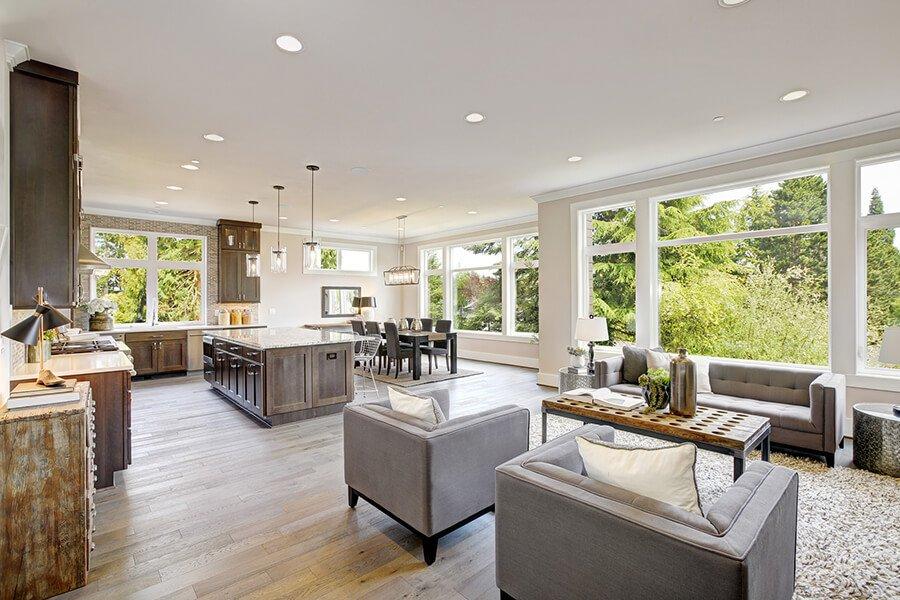
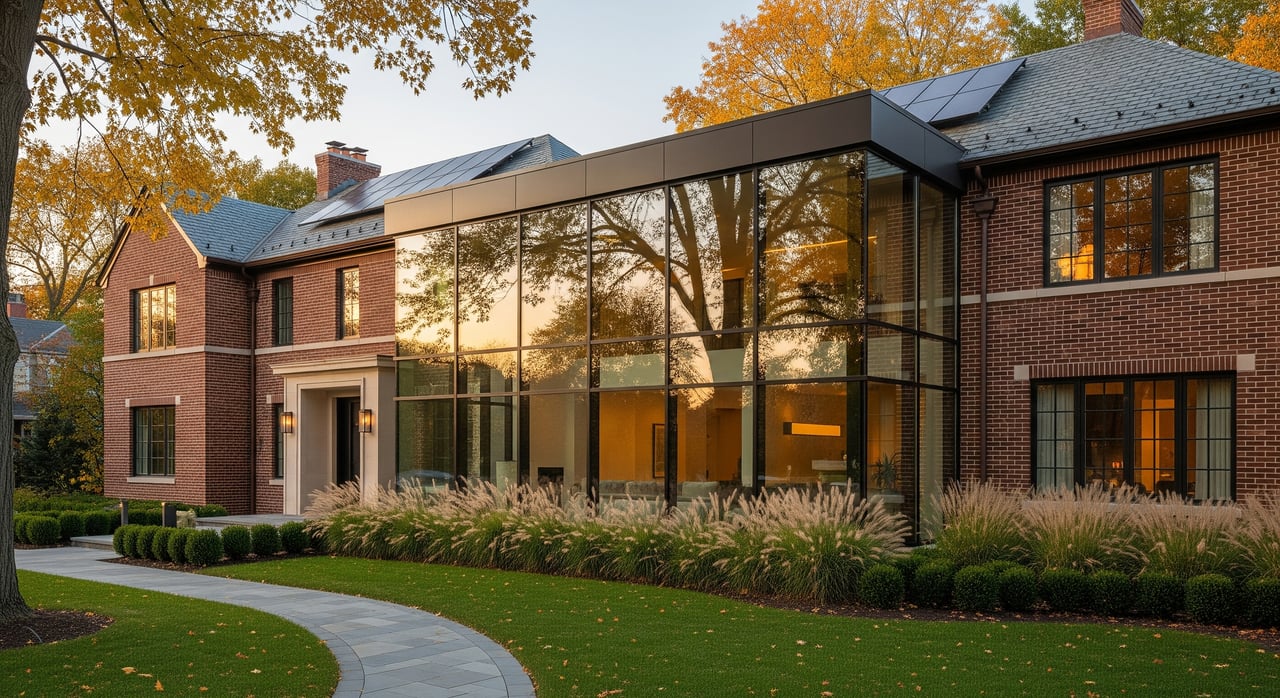
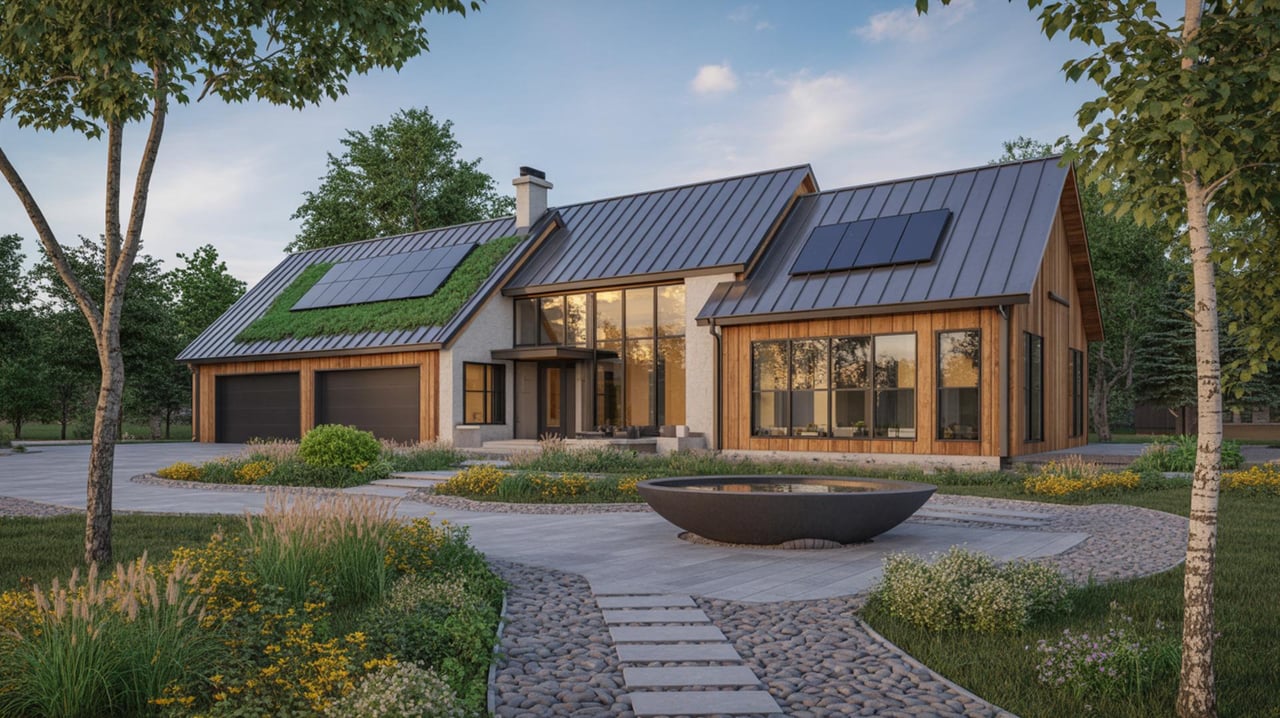
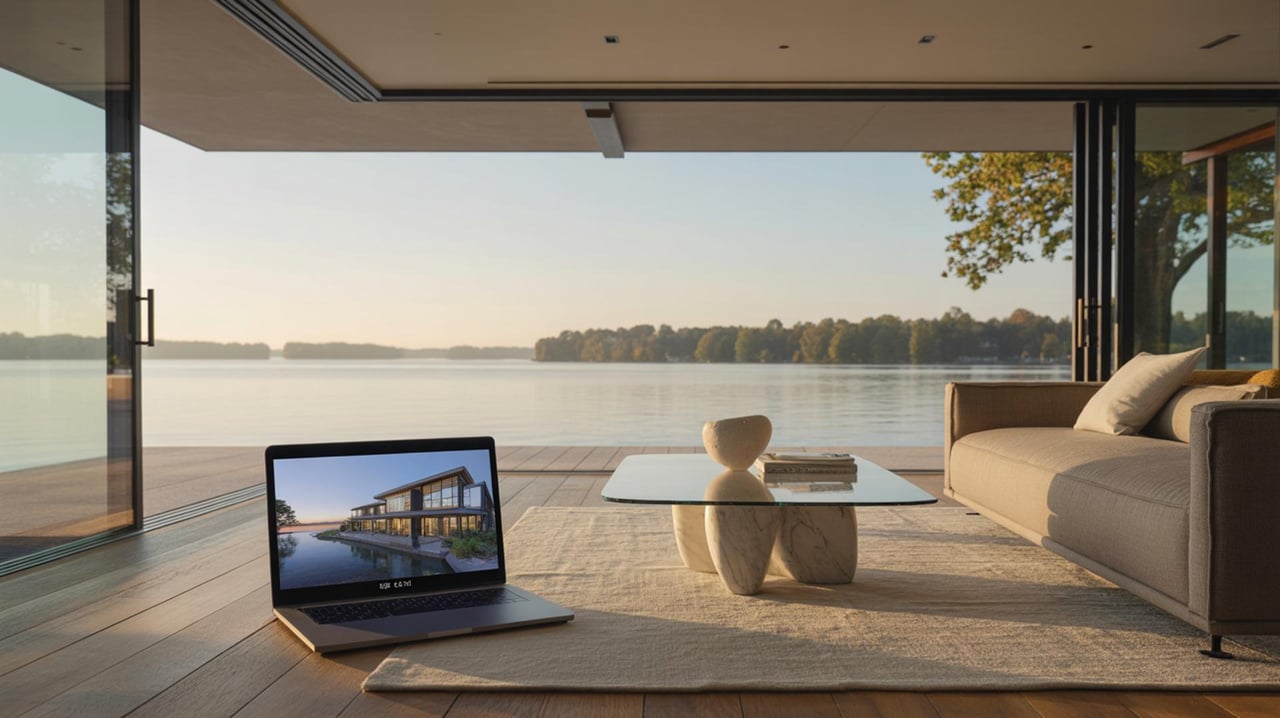
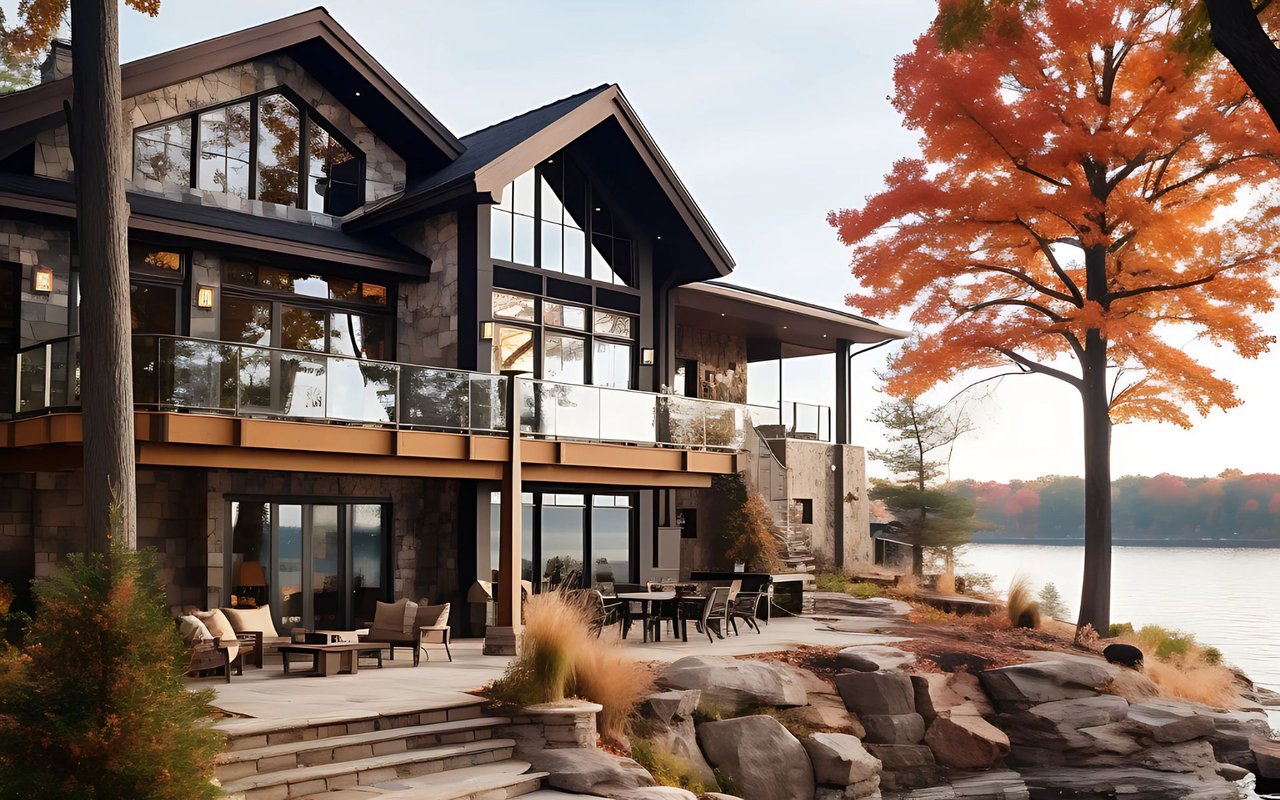
Modern builds tend to attract buyers who want year-round ease, updated systems, and a layout that supports how people live today. On Lake Minnetonka, that often means open living areas, more glass, higher ceilings, and better indoor-outdoor flow.
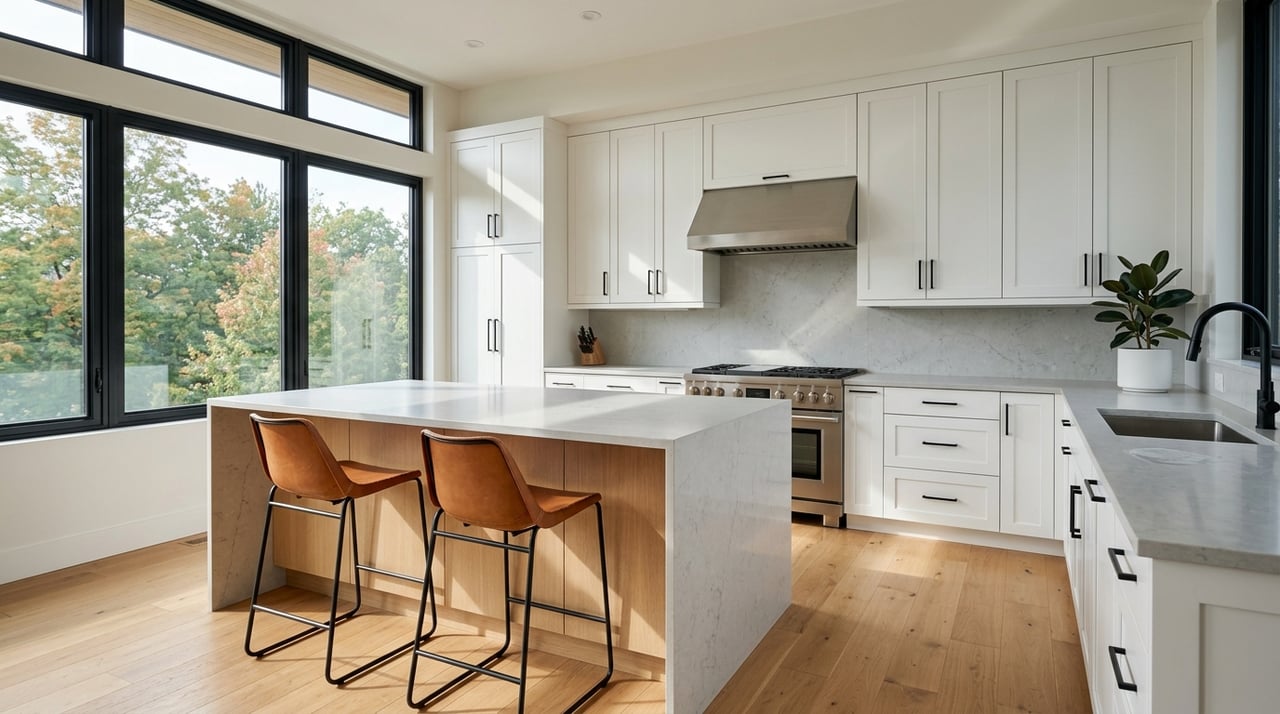
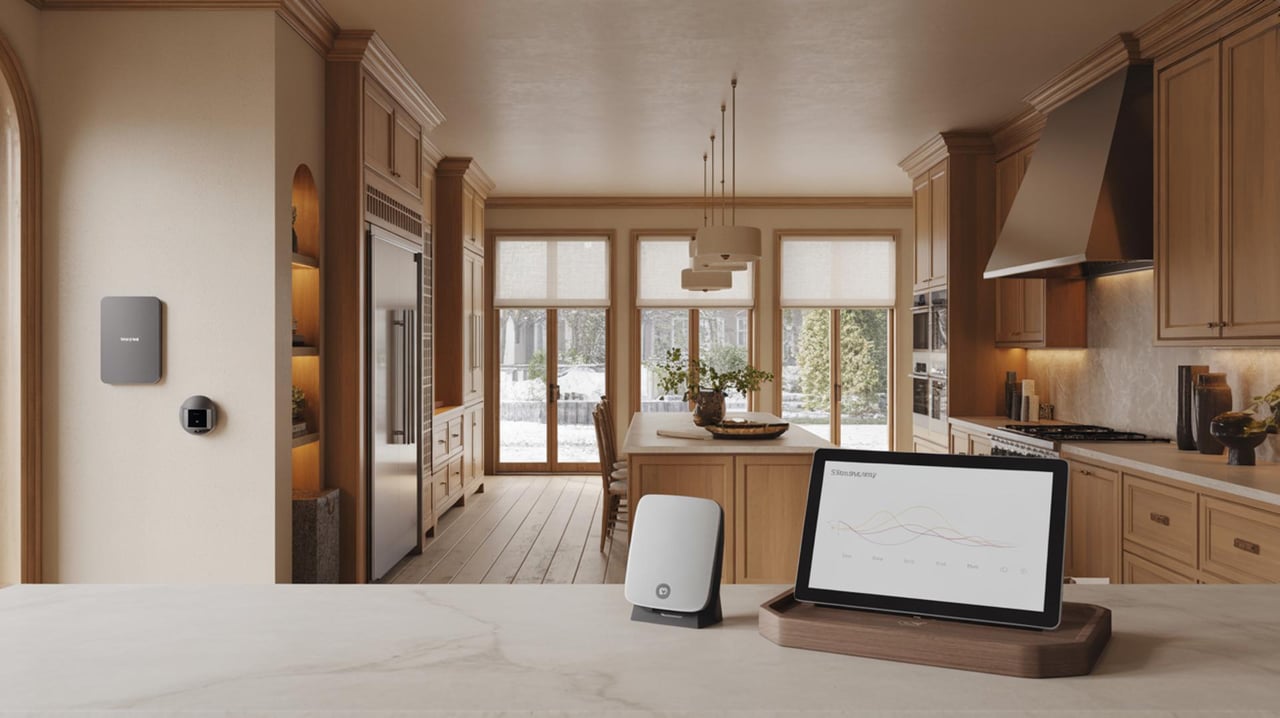
Brand-new homes also appeal to buyers who want fewer near-term projects. New construction is often associated with energy efficiency, current wiring and electronics, warranties, and the chance to select finishes that match your style.
For lake buyers, those benefits can go beyond aesthetics. A newer home often feels easier to manage, easier to entertain in, and better aligned with full-time living.
What Buyers Love About Modern Homes
A modern build usually appeals for practical reasons as much as visual ones. Common advantages include:
- Open layouts for everyday living and entertaining
- Higher ceilings and more natural light
- Updated mechanical systems and infrastructure
- Better energy efficiency
- Lower likelihood of major early replacement costs
- A more turnkey ownership experience
There is also a financial argument for newer construction. Realtor.com’s May 2026 total-cost-of-ownership research estimated that a buyer of a new home could save $25,335 over the first 10 years compared with a buyer of a 20-year-old home, largely because of lower utility bills and fewer major replacement costs.
That does not mean a modern home is always cheaper to buy. It does mean the long-term ownership picture may be more favorable than the sticker price alone suggests.
Modern Does Not Mean Unlimited
A new build on Lake Minnetonka still has to work within shoreland rules. Setbacks, height, impervious coverage, floodplain elevation, and accessory structure standards all still apply, and local ordinances may be more restrictive than the state minimum.
The Minnesota DNR also notes that low-lying structures should be placed at floodplain regulatory elevations where known, or at least three feet above the ordinary high water level or highest known water level if those elevations are not known.
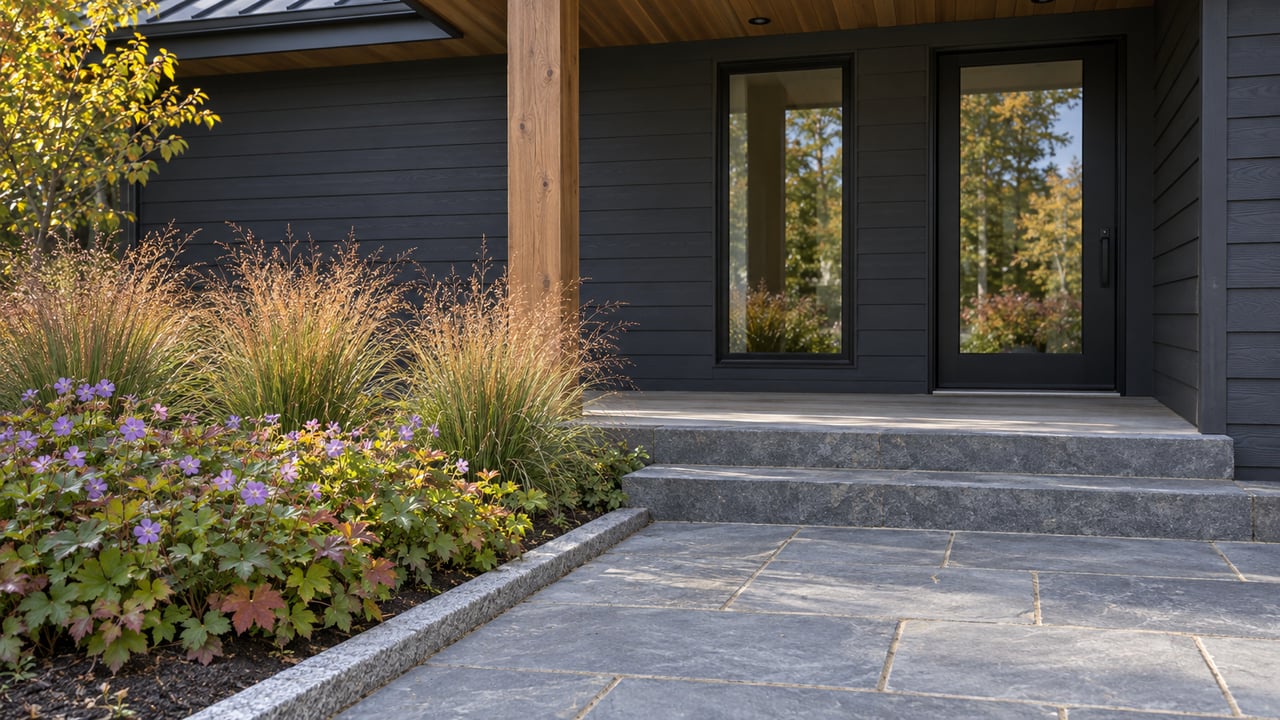
That is why the best modern lake homes are not just big or new. They are thoughtfully designed around the site itself, with careful attention to views, lot constraints, circulation, and shoreline use.
The Lot Often Matters Most
If there is one key takeaway for Lake Minnetonka, it is this: the lot often drives value as much as, or more than, the house. That is true whether you are considering a cottage, a tear-down, or a custom newer home.
On this lake, buyers often evaluate the structure and the site separately. A smaller older home on a strong piece of shoreline may outperform a larger home on a weaker lot, depending on frontage, dock utility, view corridor, and permitted use.
This is also where tear-down thinking becomes more technical. If you are buying for replacement value, you need to understand what the lot can realistically support before design conversations go too far.
Questions To Ask About Lot Feasibility
Before you commit to a cottage with future plans, or to a lot for new construction, ask:
- Is the existing lot conforming or nonconforming?
- Can setback standards be met?
- Does impervious coverage leave room for the desired footprint?
- Can a class 1 septic system be accommodated if required?
- Are there limits on accessory structures near the water?
- Does floodplain elevation affect the design?
Minnesota DNR notes that single nonconforming lots may be buildable without a variance if setback and impervious-surface standards can be met and a class 1 septic system can be accommodated. Contiguous nonconforming lots generally need to be combined.
That makes feasibility work essential. On Lake Minnetonka, a beautiful concept only matters if the site can support it.
Ownership Includes Lake Rules
Lake living also comes with operating realities that go beyond the home itself. LMCD regulates important aspects of lake use, including docks, wake activity, rental watercraft, and high-water response.
One important example is the 300-foot no-wake zone that took effect on January 1, 2023, in part to reduce wake pressure on the shoreline. The Minnesota DNR also recommends maintaining natural shoreline vegetation because it helps reduce wave and ice erosion, while cleared shorelines are more vulnerable to erosion and property loss.
For owners, that means shoreline stewardship is part of the ownership equation. A home that is already well-planned around these realities may feel easier to own and maintain over time.
Which Option Fits You Best?
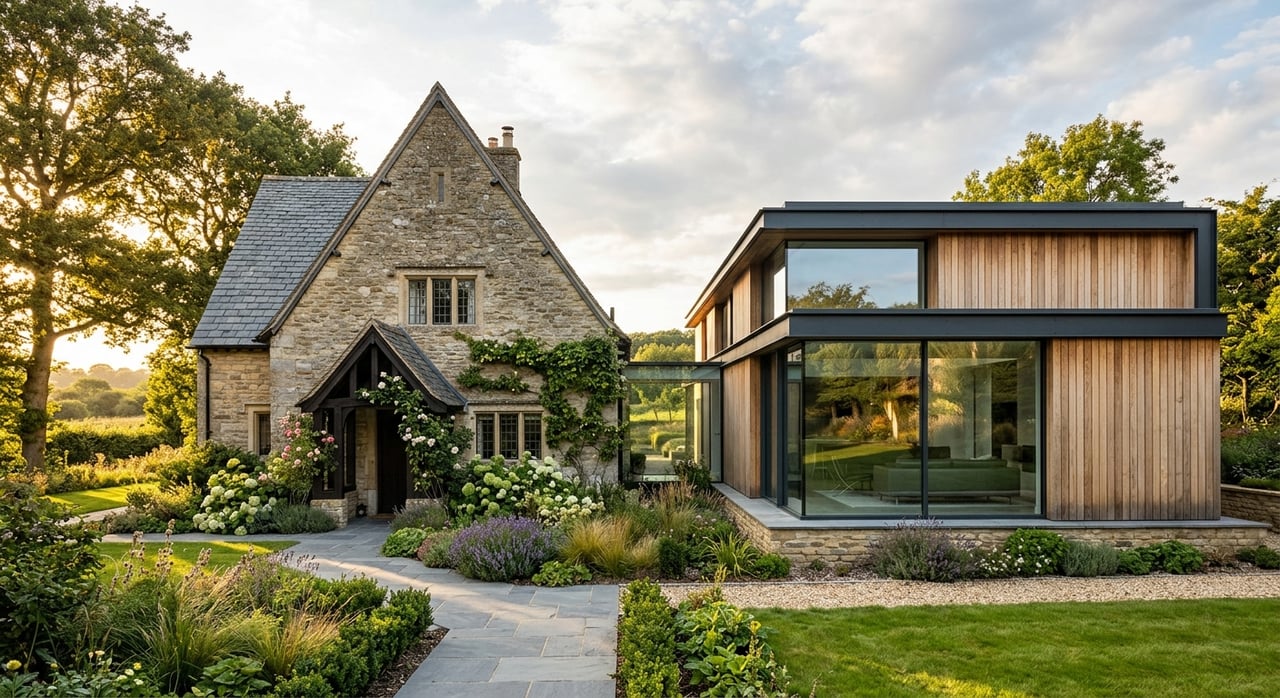
There is no universal winner between a classic cottage and a modern build. The right choice depends on how you want to live, how much work you want to take on, and whether you are buying mainly for charm, long-term functionality, or redevelopment potential.
A classic cottage may be the better fit if you value history, character, and a distinctive lake feel. It may also make sense if the shoreline and setting are exceptional, and you are comfortable with a more tailored or limited improvement path.
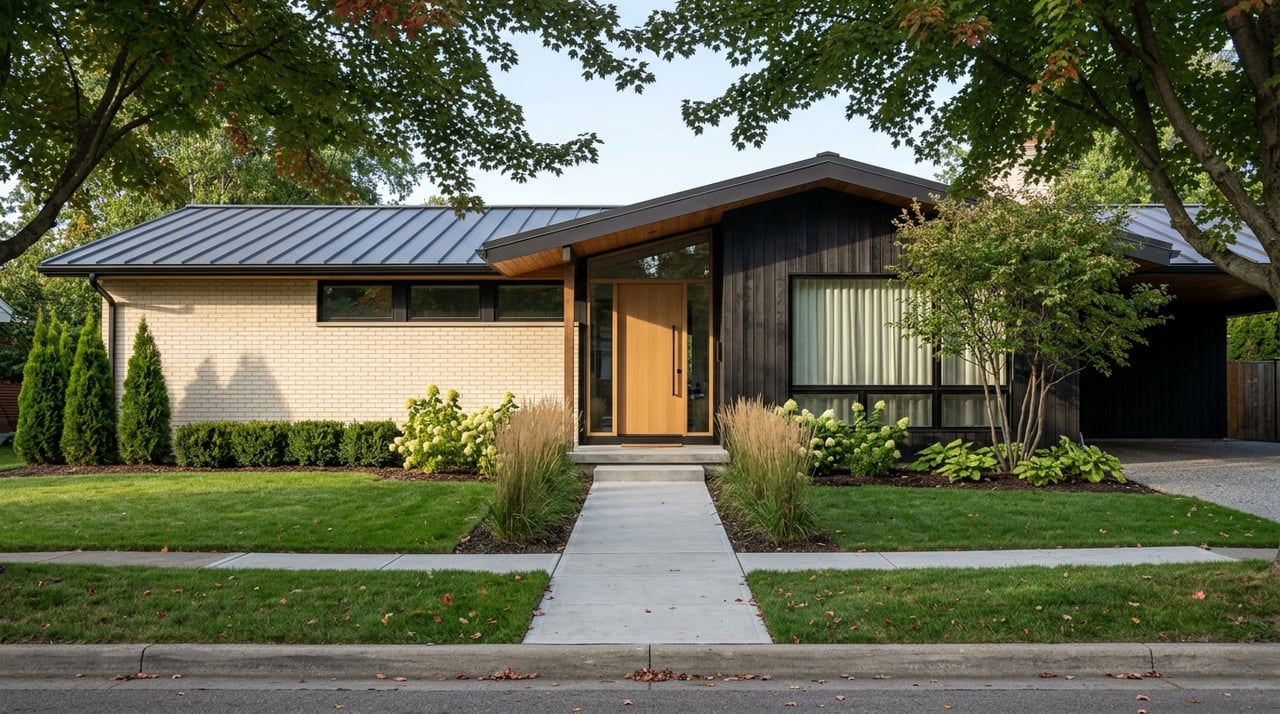
A modern build may be the better fit if you want open-concept living, lower ownership friction, and a home designed for year-round use from the start. It can also be a strong choice if you prioritize efficiency, easier entertaining, and a more turnkey experience.
For many buyers and sellers, the smartest path is to start with the site, then work backward to the right property strategy. That is especially true in a market as varied and design-sensitive as Lake Minnetonka.
If you are weighing a cottage purchase, evaluating a tear-down, or positioning a modern home for sale, working with a team that understands architecture, lot constraints, and lake-specific market behavior can make the decision much clearer. When you are ready to talk through your options, connect with Turnquist Spilseth Real Estate Group to start your lake home journey.
FAQs
What is the main difference between a classic cottage and a modern build on Lake Minnetonka?
- A classic cottage usually offers more character, history, and a traditional lake feel, while a modern build typically offers more open living space, updated systems, and easier year-round ownership.
Why do lot rules matter when buying a Lake Minnetonka home?
- Lot rules matter because shoreland standards can affect setbacks, building height, impervious coverage, septic feasibility, and whether an older nonconforming home can be expanded or replaced as planned.
Are older Lake Minnetonka cottages harder to renovate?
- They can be, because many older shoreland homes are nonconforming, which may allow maintenance or replacement but not expansion under current Minnesota shoreland rules.
Do modern builds on Lake Minnetonka have lower ownership costs?
- They can, since newer homes are often more energy efficient and may have fewer major replacement costs in the first several years of ownership.
What should you check before buying a tear-down on Lake Minnetonka?
- You should confirm whether the lot can support your intended replacement home by reviewing setbacks, impervious coverage, septic requirements, floodplain considerations, and any nonconforming lot issues.
Is Lake Minnetonka one uniform real estate market?
- No. The broader Lake Minnetonka Area includes multiple municipalities and a wide mix of home types, price points, and buyer expectations, so each property should be evaluated on its own merits.